How to Specify a Wire Mesh Container Replacement Gate

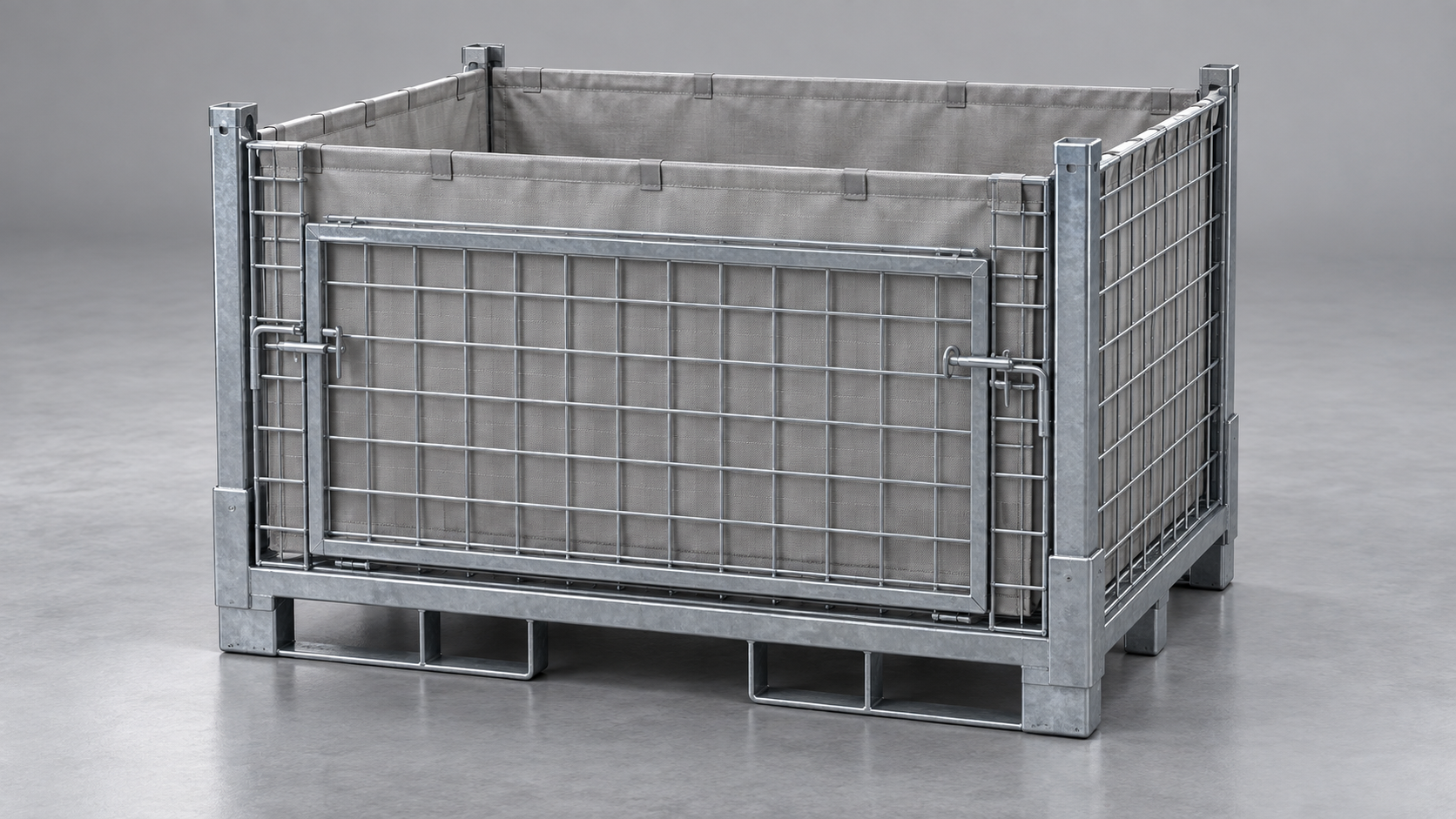
A replacement gate should match the cage revision, hinge geometry and latch engagement of the original assembly. Overall cage size alone is not enough. Start with a drawing of the receiving frame and mark the hinge axis, support points, latch receiver and clear opening. If a failed latch can be replaced independently using the approved design, order the latch and its mating hardware. If the gate frame, hinge or latch geometry changed between production runs, ask the supplier to check whether a complete assembly is the better spare. If the receiving cage frame is distorted, set it aside for assessment before trialling a replacement.
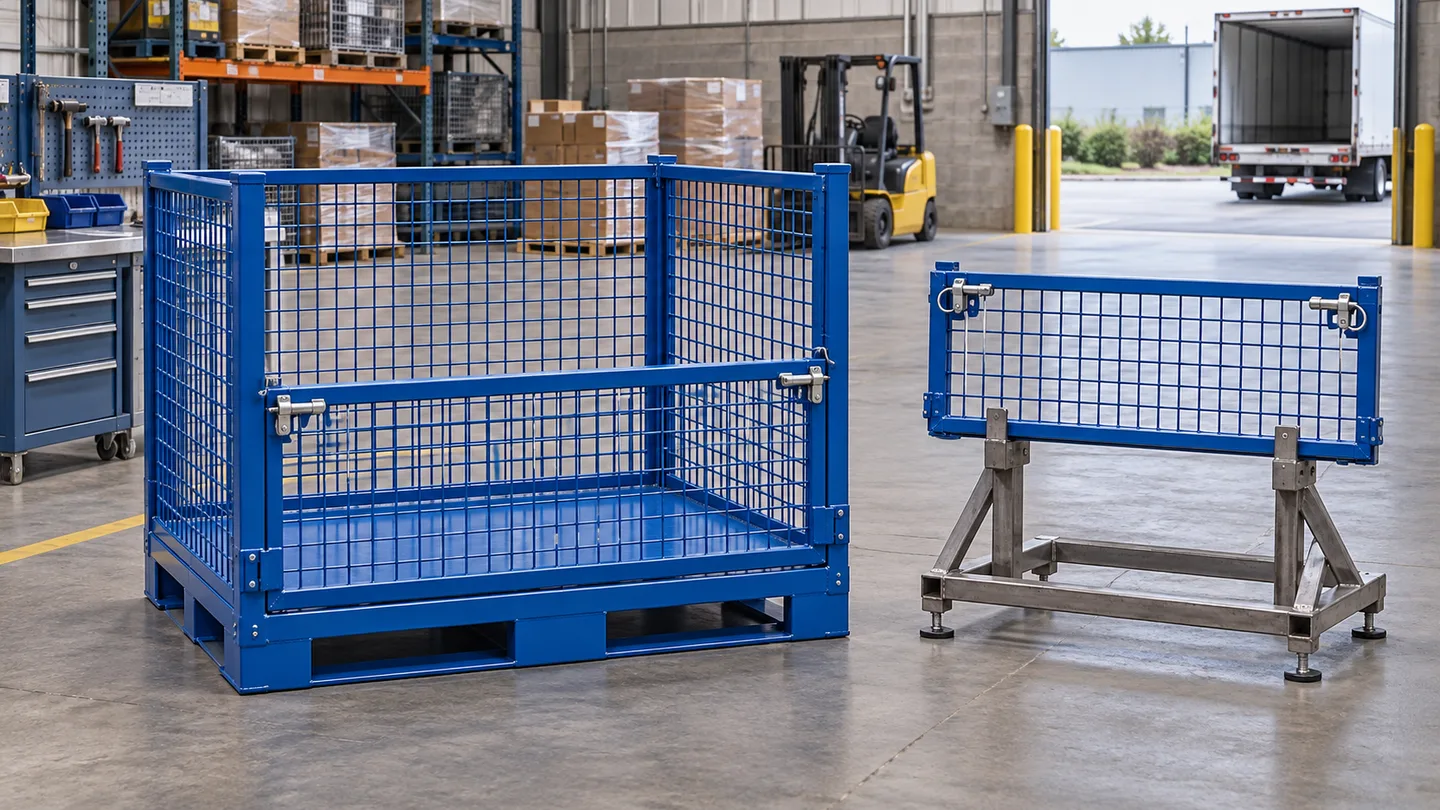
A replacement gate should match the cage revision, hinge geometry and latch engagement of the original assembly. Overall cage size alone is not enough. Start with a drawing of the receiving frame and mark the hinge axis, support points, latch receiver and clear opening. If a failed latch can be replaced independently using the approved design, order the latch and its mating hardware. If the gate frame, hinge or latch geometry changed between production runs, ask the supplier to check whether a complete assembly is the better spare. If the receiving cage frame is distorted, set it aside for assessment before trialling a replacement.
Define the part that must interchange
Imagine a warehouse has two orders of outwardly similar half-drop cages. One gate pivots from a different height and the latch enters its receiver from a different angle. A spare that fits between the uprights may still catch on a tray or fail to engage at the stop. Start the parts list with the cage drawing and revision, then list the gate, hinge hardware, latch and receiver separately. Record which parts remain on the cage when the gate is removed. A drawing that shows only the spare gate leaves its most important mating dimensions undefined.
| Spare scope | When to ask for it | What to compare |
|---|---|---|
| Latch hardware | The approved design allows replacement and the receiving surfaces remain suitable | Mounting pattern, latch travel, receiver position |
| Complete gate assembly | The gate and its hardware should arrive as one checked assembly | Hinge axis, stops, frame opening, latch engagement |
| Revision-specific gate kits | More than one cage revision remains in service | Cage ID, approved assembly number, included hardware |
Ask for a fit check with the first order
Provide the hinge and receiver details before the supplier prepares the quote. Agree which revisions share an assembly, how spare kits will be identified and which fasteners or retaining parts come with each kit. At the sample review, use an undamaged cage of the specified revision. Check closed position, latch engagement and full travel against the agreed drawing. If the cage folds, include the approved fold sequence. Ask the supplier and responsible engineer to confirm any additional checks needed before return to service. A gate that closes during a sample fit does not by itself establish the cage's load capacity.
Make the interface drawing usable
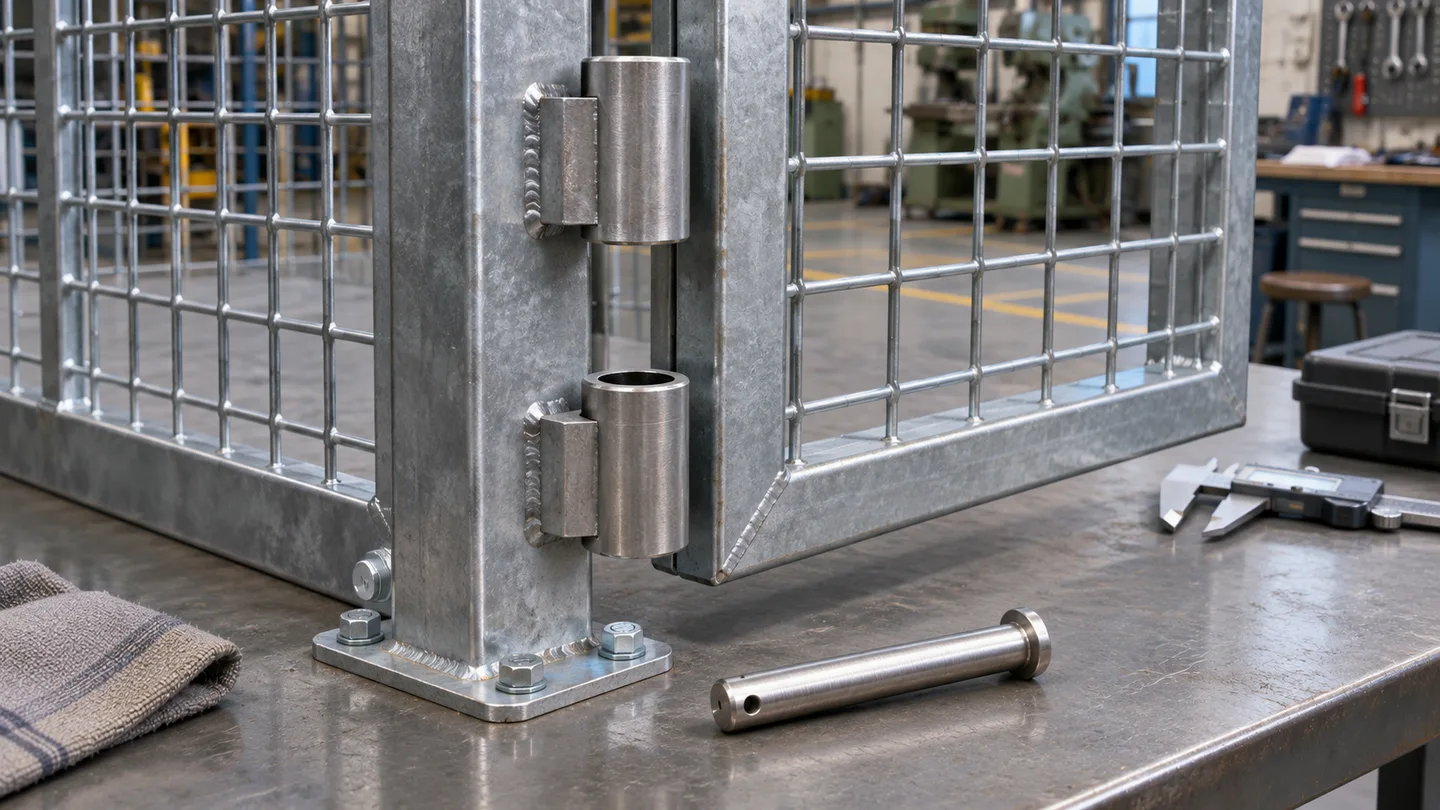
Ask for front and side views of the closed gate and one section through each hinge. Take dimensions from repeatable frame datums and mark the left and right sides as seen from the operating face. Provide the pin axis and usable pin length, retaining hardware, hinge spacing and the receiver location. Photos give context, while dimensions from an intact assembly or approved drawing give the supplier a basis for comparison. A bent gate makes a poor measurement reference.
Show the position of nearby wires, the tray edge and any cover or handle. The gate must move through the permitted sweep with the intended accessories in place. Draw the stop separately from the latch: a stop limits motion, while the latch keeps the gate in its intended state. Confirm which components are carried on the spare and which stay on the cage.
Separate the purchasing decision from the damage assessment
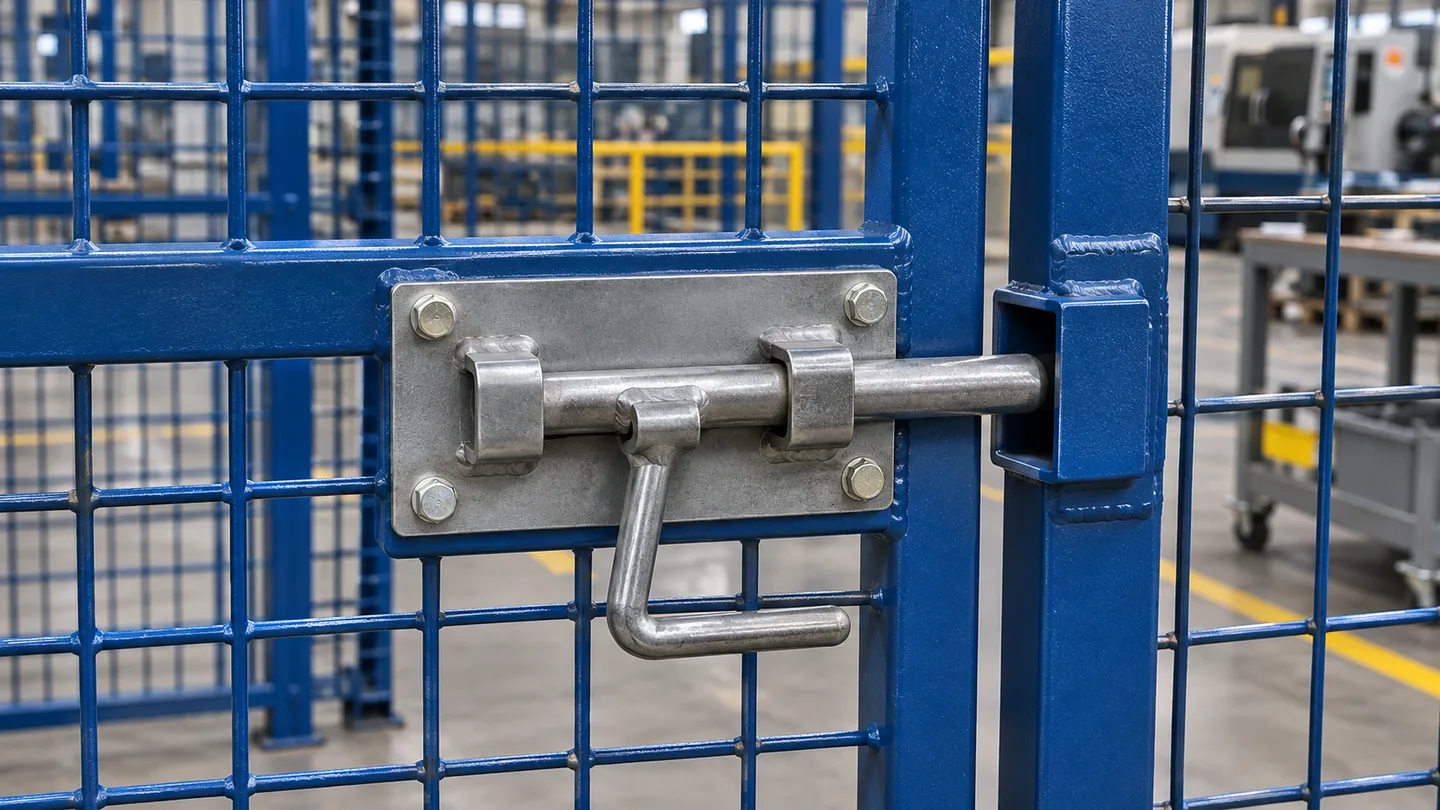
A missing loose latch component and a displaced receiver are different buying problems. For the former, ask whether the approved drawing lists the hardware independently. For the latter, the replacement part alone may leave the receiving geometry outside the approved arrangement. Quarantine affected cages under the site procedure and have the responsible engineer or supplier evaluate the mating frame before deciding the scope.
A spare gate agreement can cover a kit for new, identified cages without authorising repair of unidentified stock. Ask the buyer to record serial or batch identifiers, the affected drawing revision and any shared hardware. If two revisions cannot be shown to interchange, keep their kit identifiers distinct in the purchase order and warehouse bins.
Compare what the quote actually includes
Compare quotes using the same assembly boundary. One quote may include the gate frame, latch and hinge pins, while another may supply only the welded gate. List every included part and its finish, the drawing revision, fitting responsibility and sample approval. Ask whether the price includes a fit trial on a representative cage and whether the trial uses a production-equivalent gate.
For a mixed fleet, compare the number of unique spare kits against the cost and disruption of changing existing equipment. Do not assume that adopting one gate across the fleet is less expensive. An approved revision-specific kit can be simpler when cages differ at their hinge or stop interfaces.
Verify the sample before stocking spares
Use a sound representative cage with its intended tray or dividers. Observe closed alignment, latch engagement, release and travel through the operating positions. For collapsible cages, also check the approved empty fold sequence and confirm the gate does not interfere with another wall or create a new projection. Record the actual gate and cage revision together.
Agree what happens when the next order changes wire spacing, hinge hardware or receiver position. Keep a controlled drawing or supplier assembly reference with the stores record. When a later revision is introduced, require a fit decision before the existing part number is reused. This helps purchasing avoid taking visual similarity as proof of interchangeability.
Write the spare line item as a fit requirement
For a new order, put the gate and the spare on the same release drawing. A useful spare line item lists the mating cage revision, gate handing, hinge and stop details, latch and receiver scope, and the accessory states in which fit will be checked. Require the supplier to flag any hardware that differs from the production assembly. If the parts will be stocked at two plants, use the same identifiers in both places so a gate for a different revision cannot be substituted by mistake.
The sample check should cover the way the stores team receives and picks the spare. Put the revision and assembly reference on the kit label and confirm that the bag or carton keeps small fittings together. An approved gate may still be a poor service kit if its pin retainers are omitted or the receiving plant has no way to distinguish the two handings. Decide who signs the fit record and who updates the spare list after a drawing change.
Prepare the enquiry
- Make the interface drawing usable Ask for front and side views of the closed gate and one section through each hinge.
- Separate the purchasing decision from the damage assessment A missing loose latch component and a displaced receiver are different buying problems.
- Compare what the quote actually includes Compare quotes using the same assembly boundary.
- Verify the sample before stocking spares Use a sound representative cage with its intended tray or dividers.
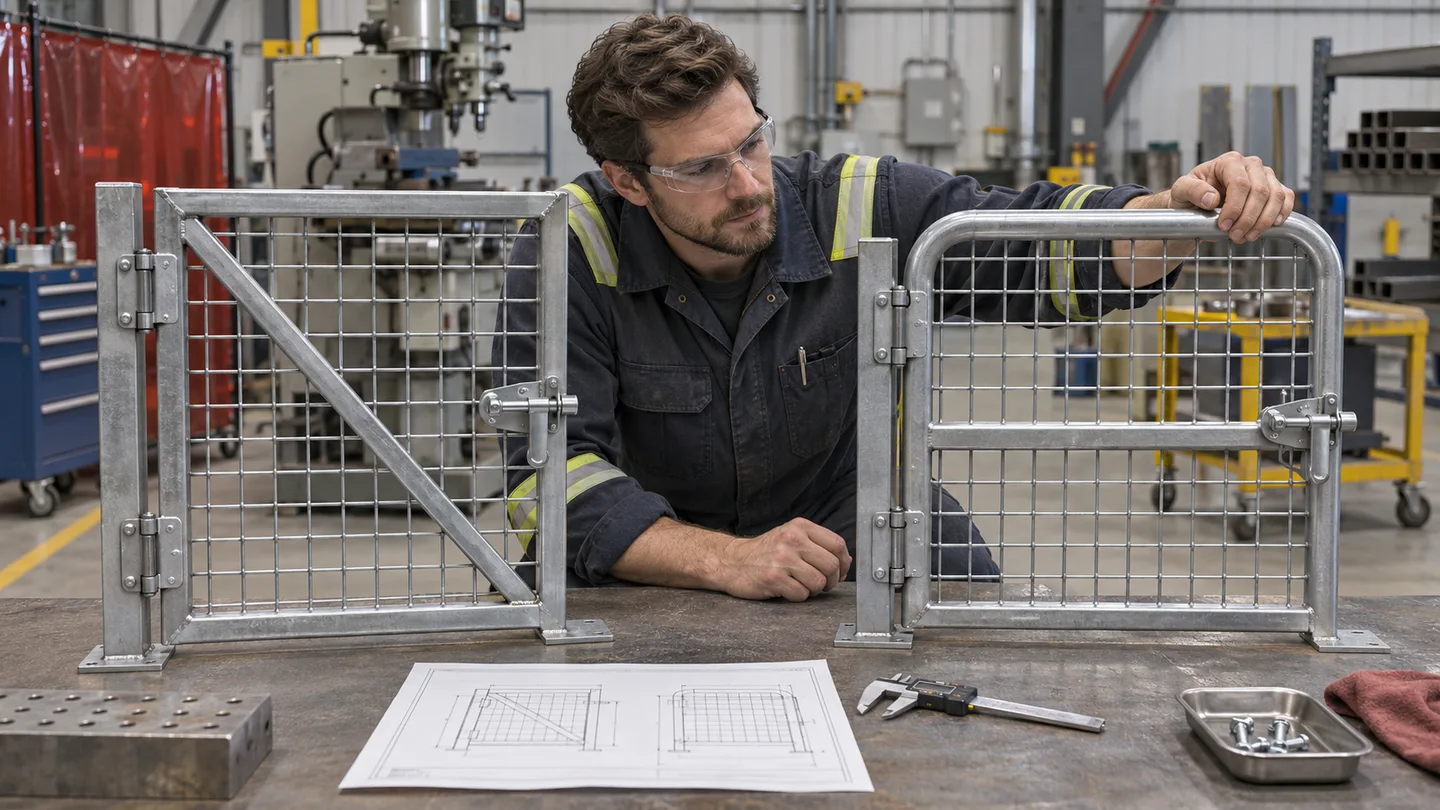
Send HAOFU a gate photo, cage drawing or revision mark and a short description of the spare you need. Include a close view of the hinge and latch receiver when available. The wire mesh container page covers configurable access gates for new cages. Start an enquiry to discuss the fit information for your order.
Related reading and technical references
Frequently Asked Questions
- Can I order by cage width alone?
- Send the cage revision, hinge axis and receiver position as well as the clear opening. Two gates of the same width can have different operating interfaces.
- Should I buy the latch or the entire gate?
- Ask for the smallest approved service part when the mating frame and hardware are suitable. Compare the complete assembly when the gate geometry or several fittings have changed.
- Can a gate from another supplier fit?
- Ask both parties to compare controlled drawings and verify the fit on a representative unit. Similar outside dimensions do not establish interchangeability.
- What should I send with my enquiry?
- Start with a cage and gate photo. Add the revision, hinge and latch details, quantities and operating positions when available.