Selective vs Drive-In vs Push-Back vs Pallet-Flow Racking

Selective racking gives direct access to every pallet (low density, high selectivity); drive-in and push-back are denser but last-in-first-out, with push-back running 2–5 pallets deep; pallet-flow uses gravity rollers for dense first-in-first-out rotation. Choose by SKU count and whether you need FIFO rotation, and design and install to recognised standards such as the RMI.
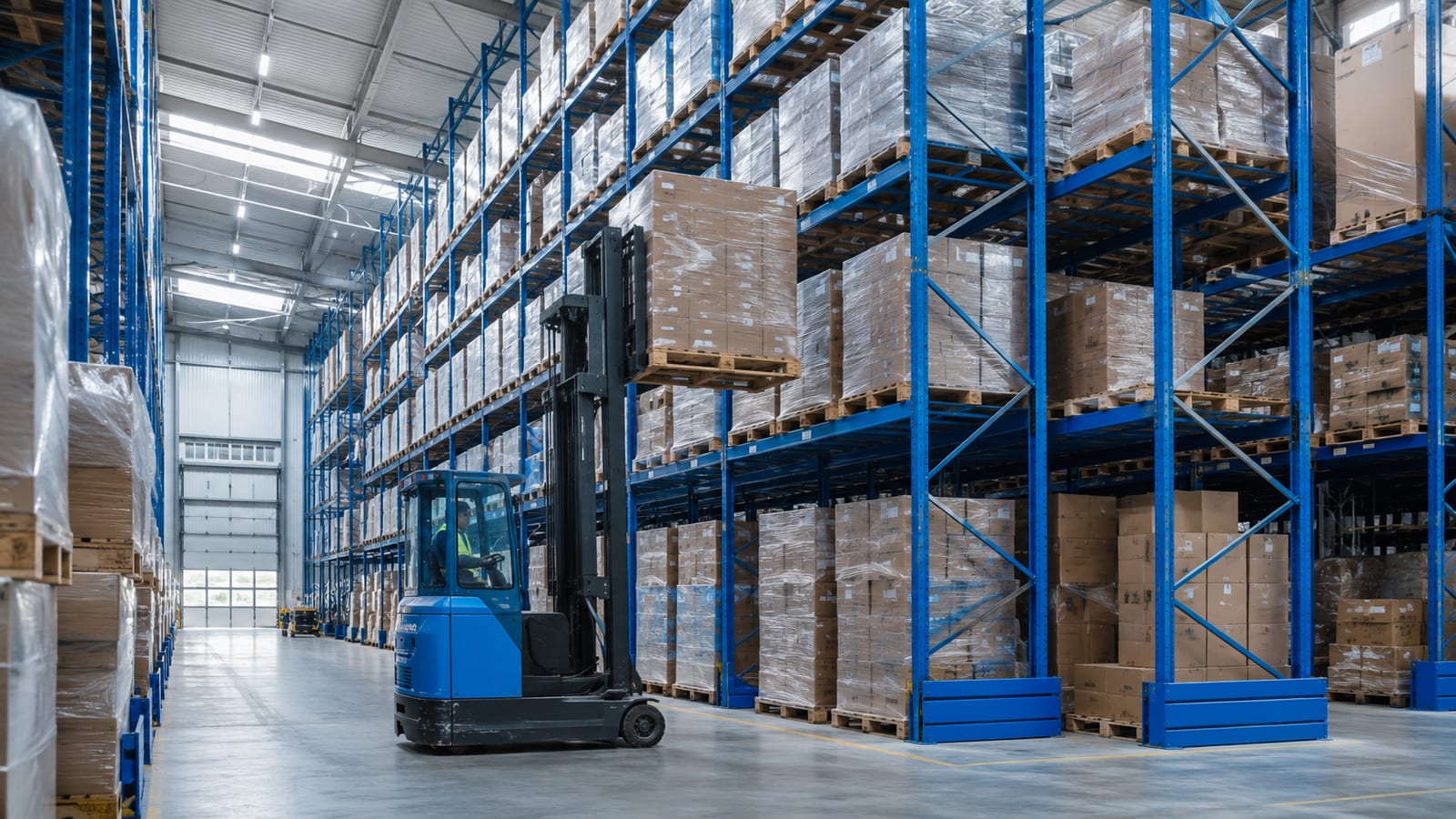
The four main pallet racking types — selective, drive-in, push-back and pallet-flow — all store pallets, but they trade storage density against selectivity (how easily you reach any given pallet). Picking the right one comes down to your SKU count, rotation and how dense you need to be.
Quick answer: which racking type
Selective racking gives direct access to every pallet at the lowest density; drive-in and push-back pack pallets denser but run last-in-first-out, with push-back 2–5 deep on nested carts; pallet-flow uses gravity rollers for dense first-in-first-out rotation. Choose by SKU count and whether you need FIFO, then design to standards such as the RMI.
The four types compared
| System | Density | Access / rotation | Best for |
|---|---|---|---|
| Selective | Lowest | Every pallet accessible; FIFO or LIFO | Many SKUs, direct access |
| Drive-in | Very high | LIFO; forklift drives into the lane | Few SKUs, high volume, cold store |
| Push-back | High | LIFO; pallets on nested carts | Medium SKUs, 2–5 deep |
| Pallet-flow | High | FIFO; gravity rollers | High throughput, stock rotation |
How to choose
- Selective — the default when you have many SKUs and need every pallet reachable.
- Drive-in — maximum density for a few high-volume SKUs (LIFO), common in cold storage.
- Push-back — a density/selectivity middle ground, 2–5 pallets deep.
- Pallet-flow — gravity FIFO for high-throughput rotation.
Whichever you choose, racking should be designed and installed to recognised standards such as the Rack Manufacturers Institute (RMI) and handled per OSHA materials-handling practice.
Related reading
Go deeper on selective systems in heavy-duty pallet racking explained.
Spec the right racking
HAOFU supplies heavy-duty pallet racking matched to your loads and pallets. Tell us your SKUs and throughput and we will recommend the system.
Frequently Asked Questions
- What is the difference between selective and drive-in racking?
- Selective racking gives direct access to every pallet at the lowest density — best for many SKUs. Drive-in racking is far denser but LIFO only, with forklifts driving into the lane — best for a few high-volume SKUs.
- Which pallet racking has the highest storage density?
- Drive-in racking usually gives the highest density because it removes aisles, followed by push-back and pallet-flow. The trade-off is selectivity — you cannot reach every pallet directly as you can with selective racking.
- What is the difference between push-back and pallet-flow racking?
- Both are dense. Push-back is LIFO (pallets sit on nested carts and push back as you load from the front), while pallet-flow is FIFO (pallets roll on gravity rollers from a load side to a pick side) — better for stock rotation.
- How do I choose the right racking system?
- Start from your SKU count, throughput and whether you need FIFO or LIFO. Many SKUs → selective; few high-volume SKUs → drive-in; a density/selectivity balance → push-back; high-throughput rotation → pallet-flow.
- Which racking type is best for cold storage?
- Drive-in racking is the usual choice for cold storage. It gives very high density by removing aisles and letting a forklift drive into the lane, which suits a few high-volume SKUs on a last-in-first-out basis — a good fit for the limited, expensive space of a cold store. The trade-off is selectivity: you cannot reach every pallet directly as you can with selective racking.