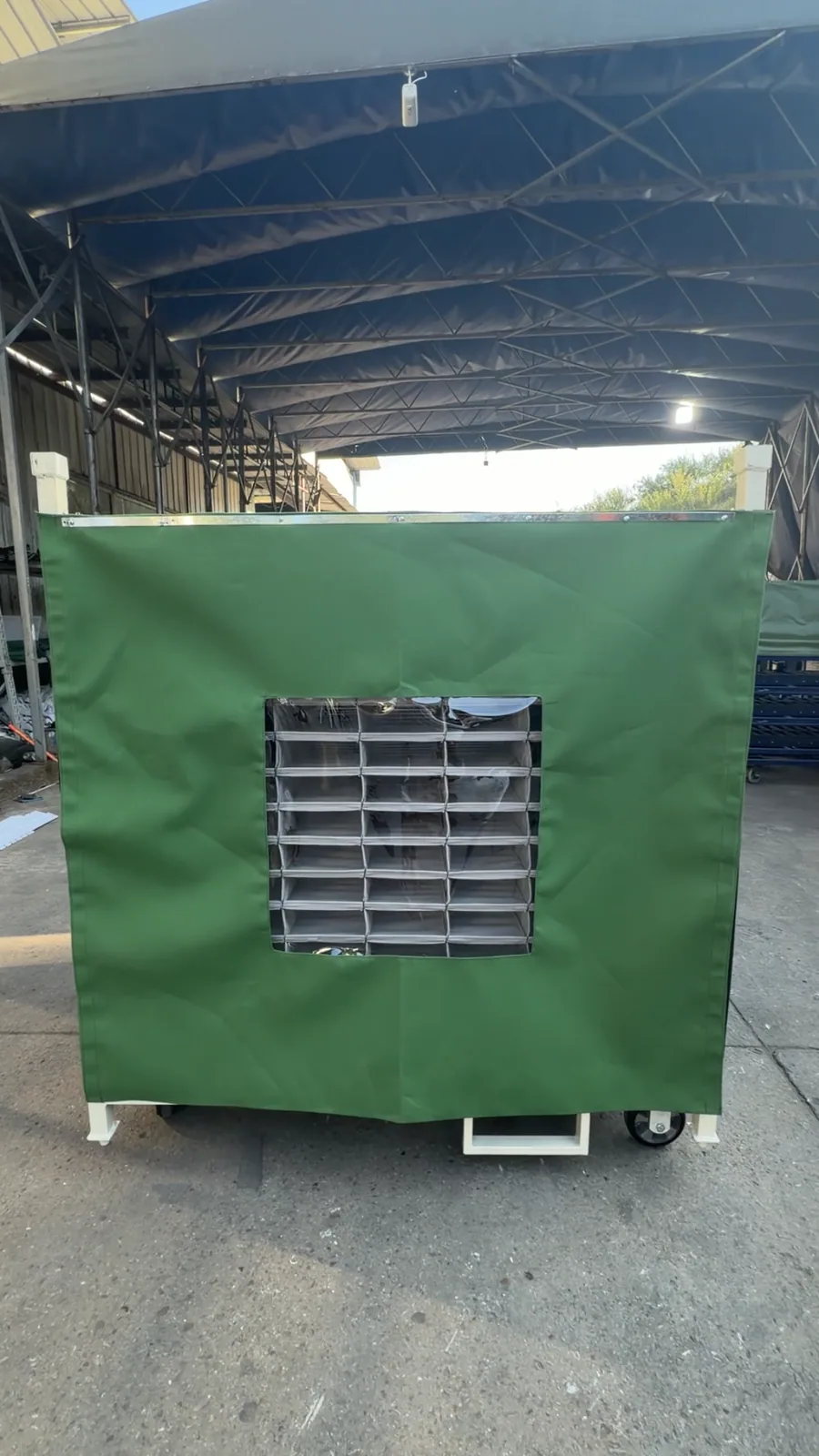
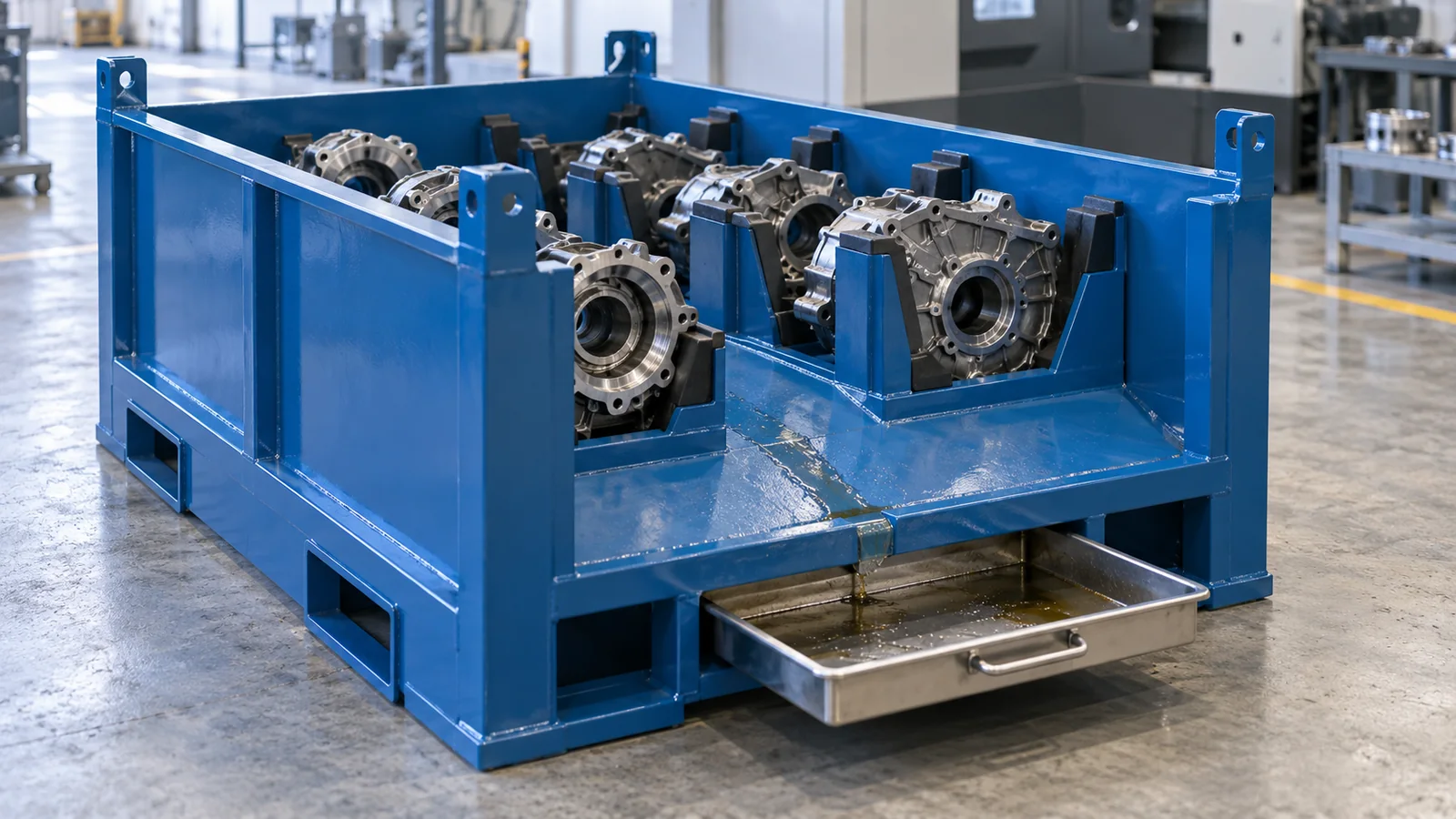
Stackable Metal Racks with Sheet Platform Decks: Specification and Load

A stackable metal rack with a metal sheet platform uses a continuous steel deck instead of open bars or mesh. It is a configuration to review when parts need a continuous base, while mesh or open decking may suit a different access, drainage or handling requirement. The final deck and frame follow the approved part and route.
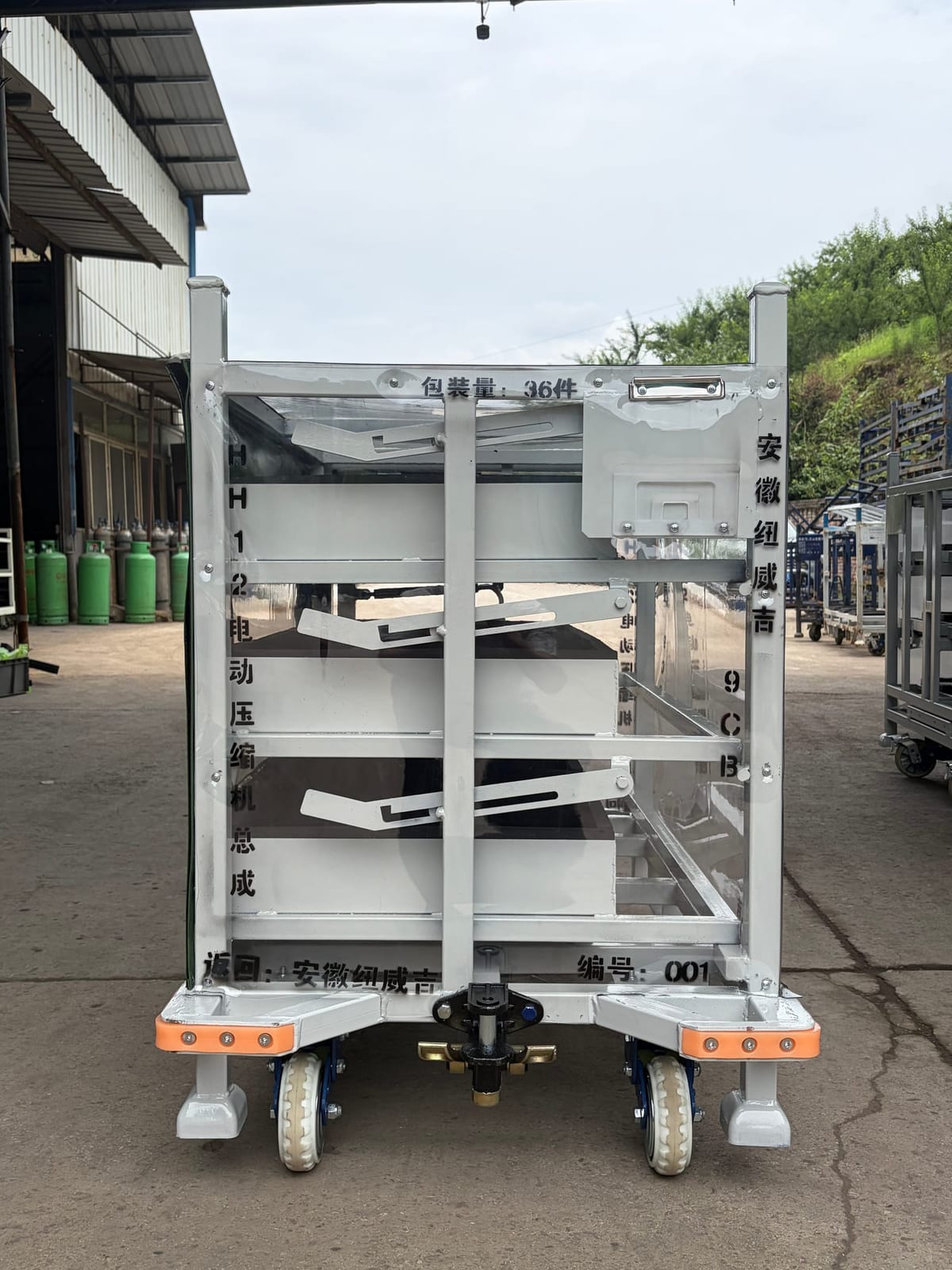
A stackable metal rack with a metal sheet platform uses a solid steel deck across the base instead of open bars, slats or mesh. That single choice changes how load is spread, whether small parts can be carried at all, how the rack drains and cleans, and what it weighs. This guide covers when sheet decking is the right answer, how load travels once racks are stacked, and exactly what a manufacturer needs from you to size it.
Sheet metal base vs mesh deck: when to review each option
Specify a solid sheet platform when any of these are true:
- Parts are small enough to fall through mesh or between bars
- The load is unstable, loose or bagged and needs a continuous surface
- Parts sit on foam, blocks or nests that need a flat plane to bond or bolt to
- Oil, swarf or fluid must be contained rather than dropped on the rack below
- Contact pressure is concentrated and would deform an open deck
Choose mesh or open decking instead when you need drainage, wash-down, visibility for counting, or the lowest possible tare weight.
Why the deck matters more than buyers expect
On a quotation the deck looks like a finish option. Structurally it is the surface that receives every kilogram before the frame ever sees it. An open deck concentrates the load into a few contact lines; a sheet platform spreads it across the full plane. For a dense part with a small footprint, that difference decides whether the deck stays flat over hundreds of cycles or dishes in the middle after twenty.
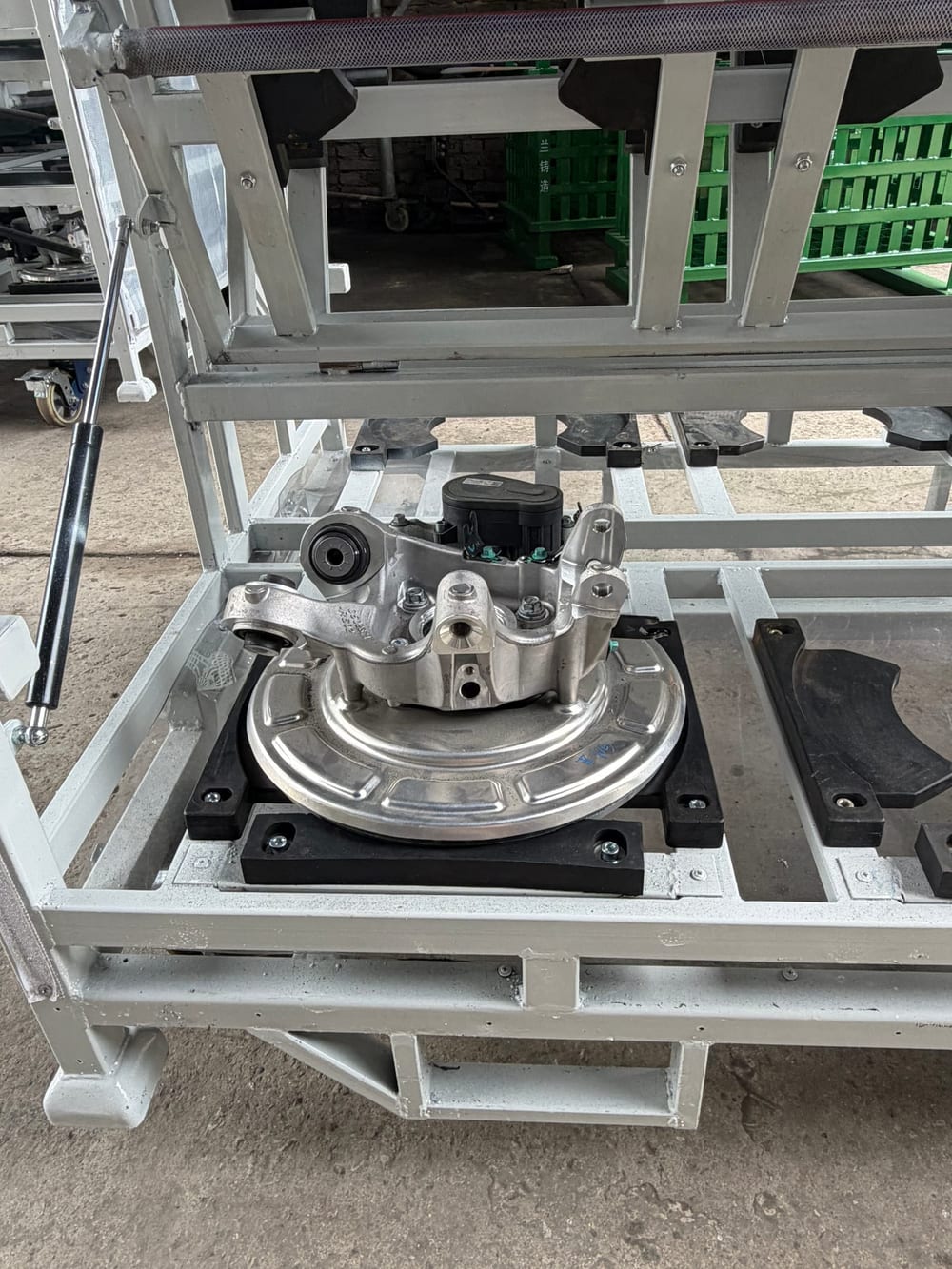
How load travels through a stack
The deck rating alone does not tell you what a stack can carry. Once racks are stacked, the bottom unit carries its own load plus everything above it, and that combined weight must pass down through the corner posts and feet — not through the deck of the unit below.
Deck options compared
| Deck | Load behaviour | Best for | Trade-off |
|---|---|---|---|
| Solid sheet platform | Spreads load across the full plane | Small, loose, oily or unstable parts; bonded nests | Heaviest; traps fluid unless drained |
| Perforated sheet | Near-solid spread with drainage | Wet or wash-down parts that still need a surface | Slightly lower capacity than plain sheet |
| Mesh deck | Distributes along wires | Ventilation, visibility, counting | Small parts fall through |
| Open bar / slat | Concentrates on contact lines | Large rigid parts with known contact points | Deforms under concentrated point loads |
| Timber infill | Spreads, absorbs shock | Surfaces needing a softer contact | Wears, absorbs fluids, adds ISPM-15 duties on export |
How to specify one: the data we need
- Part footprint and weight — plus how many go on one deck.
- Contact pattern — flat and spread, or concentrated on small feet? This drives deck gauge more than total weight.
- Deck load and stacked load — what one rack holds, and how many loaded racks stack above it.
- Handling — forklift pockets, pallet-truck entry, casters or a tow bar.
- Environment — indoor, outdoor, wash-down or oily. This decides the finish and whether the deck needs drainage.
- Return mode — does the empty rack nest, fold or ship as-is? This affects deck and post design together.
Do not use a published rack capacity as a transferable figure. The usable deck and stack condition must be defined from the actual part-contact pattern, rack geometry, handling method and agreed validation evidence. Ask the supplier to state the specific load case and acceptance method for the proposed design.
Common mistakes
- Quoting only the deck rating. Without a stacked rating, nobody knows how high a loaded rack can safely go.
- Sheet decking with no drainage outdoors. A solid deck becomes a tray; water sits, and the finish fails from the deck up.
- Sizing gauge from total weight. A 400 kg load on four small feet is a different problem from 400 kg spread flat.
- Forgetting the tare. Sheet decking adds weight that eats into both forklift capacity and container payload.
- Skipping the load test. Structural design should be validated on a sample before volume; this is standard practice under a documented quality system such as ISO 9001, which HAOFU operates to.
Design and safe use of steel storage racks are covered by industry bodies including RMI (an MHI group) in North America, and safe handling follows OSHA materials-handling practice.
Key takeaways
- The part decides the deck. Small, loose, oily or unstable loads point to a sheet platform.
- Deck rating and stacked rating are different numbers — get both in writing.
- Contact pattern drives deck gauge more than total weight does.
- Solid decking outdoors needs drainage, or it becomes a water tray.
Specify your deck with us
Next in this series: removable post and height extension stacking racks, which covers what happens to the load path when the posts come out. For the space case, see how stackable racks maximise warehouse space.
See the range on our stackable metal racks page, or send us your part drawings and our engineers will size the deck and the stack and reply within 24 hours.
Frequently Asked Questions
- What is a stackable metal rack with a metal sheet platform?
- It is a stacking rack whose deck is a continuous steel sheet rather than open bars, slats or mesh. The solid surface spreads load across the whole plane instead of concentrating it on contact lines, which is what makes it suitable for small, loose, unstable or oily parts that an open deck cannot carry.
- When should I choose sheet decking instead of mesh?
- Choose sheet when parts would fall through mesh, when the load is loose or bagged, when nests and foam blocks need a flat plane to mount to, or when fluid must be contained rather than dropped on the rack below. Choose mesh when you need drainage, wash-down, ventilation or visibility for counting, and when tare weight matters.
- How much load can a sheet platform rack carry?
- There is no transferable universal figure. The usable deck and stack condition depend on the actual part-contact pattern, rack geometry, handling method and the loaded units above it. Ask the supplier to state the proposed load case and validation method for your design before approval.
- What is the difference between deck rating and stacked rating?
- Deck rating is what one deck carries. Stacked rating is what the bottom rack carries once loaded racks are stacked on top, and that combined weight passes down through the corner posts and feet rather than through the deck below. Always ask a manufacturer for both numbers.
- Does a solid deck cause problems outdoors?
- It can. A continuous deck becomes a tray that holds water, and standing water attacks the coating from the deck upward. For outdoor or wash-down use, specify drainage holes or a perforated deck, and match the finish to the environment — usually hot-dip galvanizing rather than powder coating.