Steel Pallet Feet or Runners? Start with the Load Path

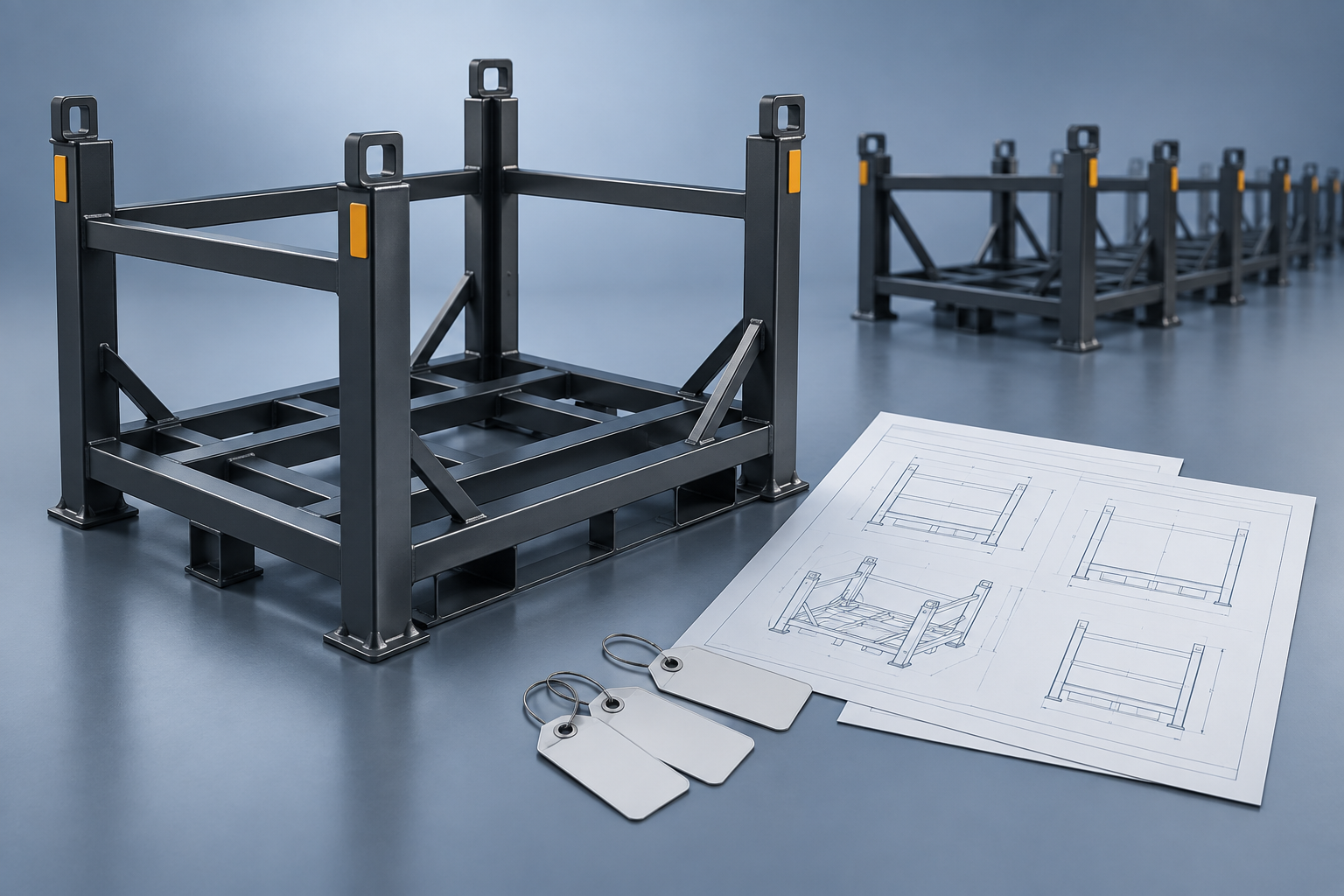
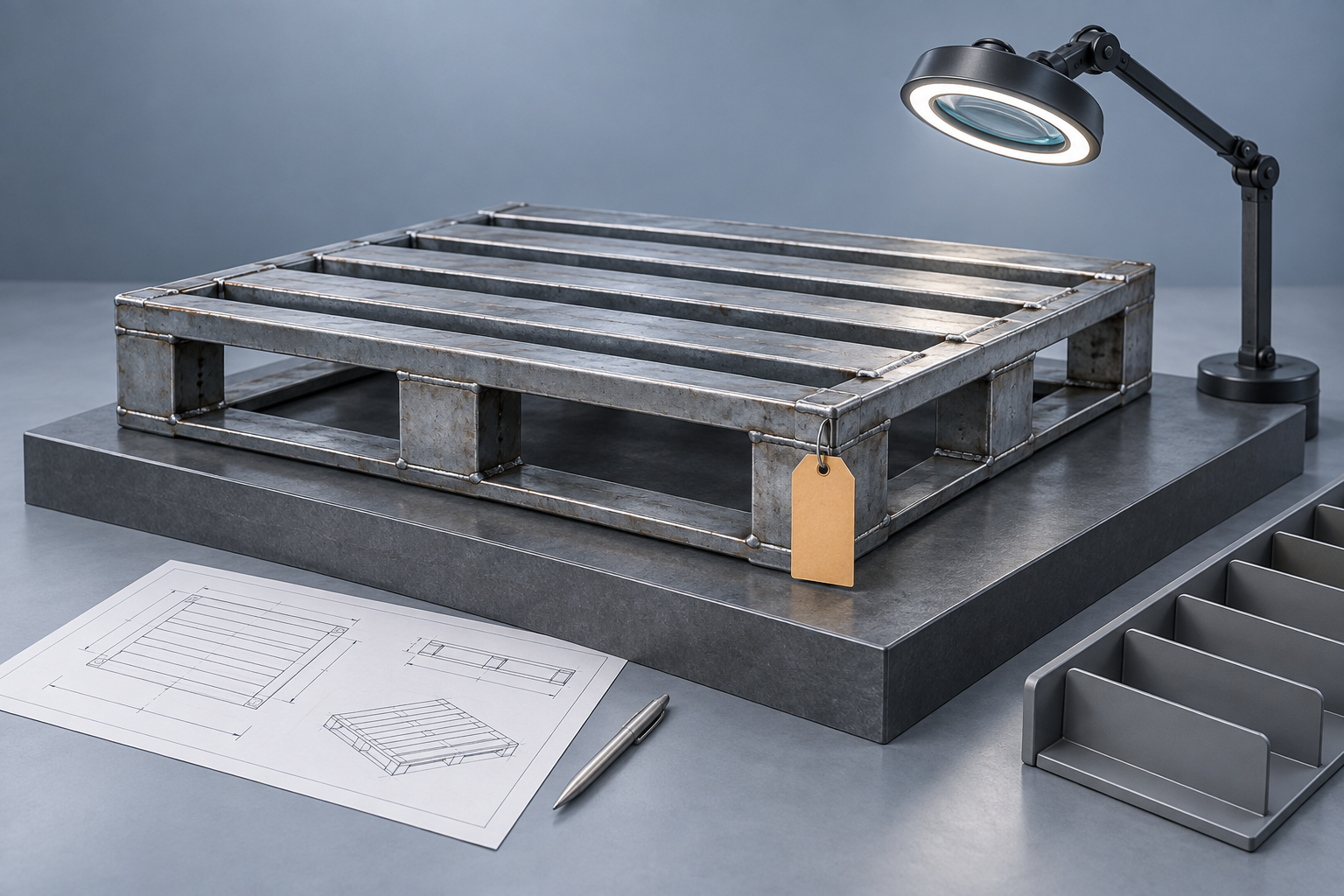
Choose steel pallet feet or runners only after mapping the full load path: where the cargo bears on the deck, how the deck transfers that force to the base, and where the base meets the floor, rack beams or conveyor. Feet create separate landing points; runners create longer contact lines. Neither is automatically stronger or better for every forklift route or storage system.
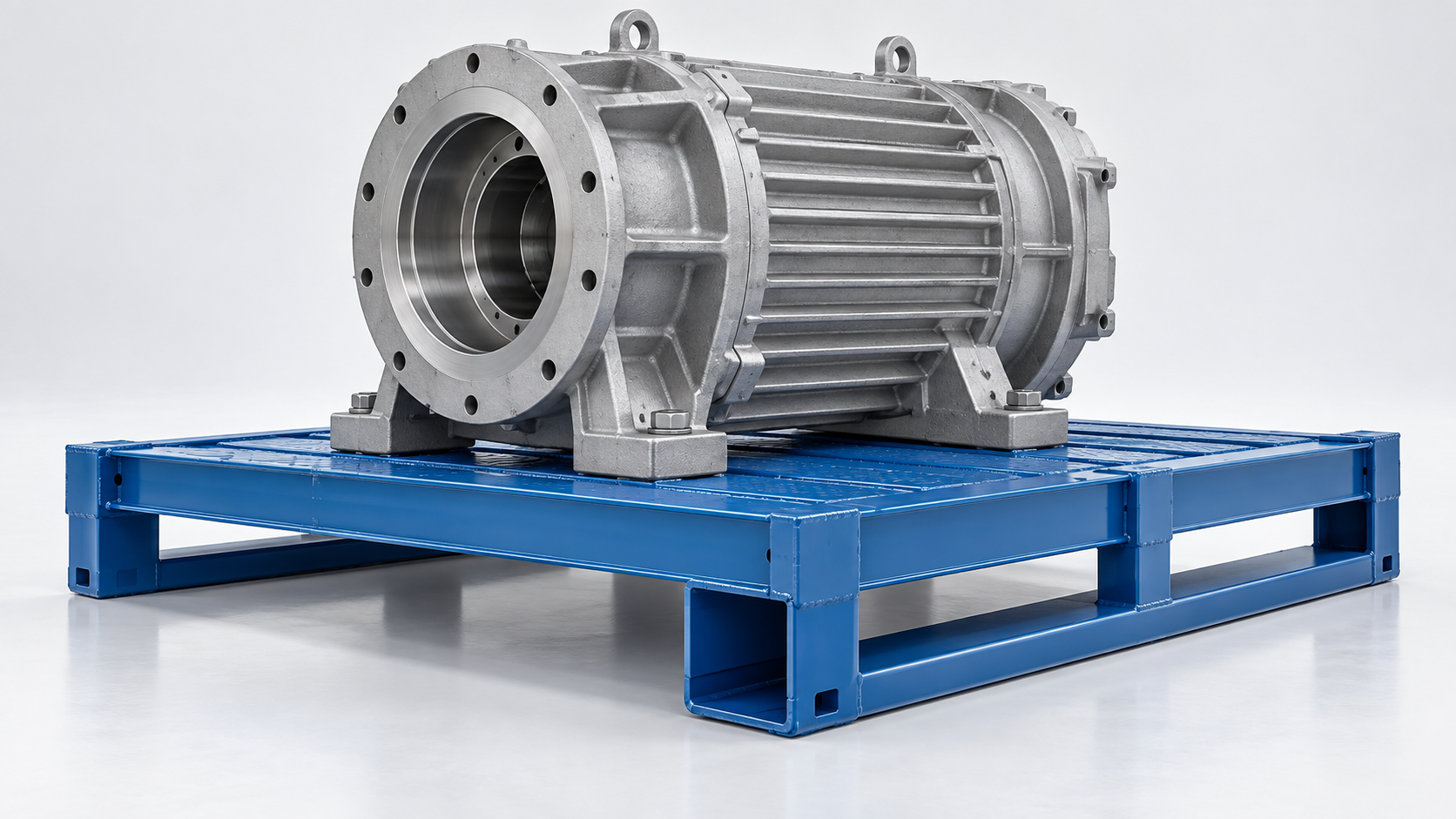
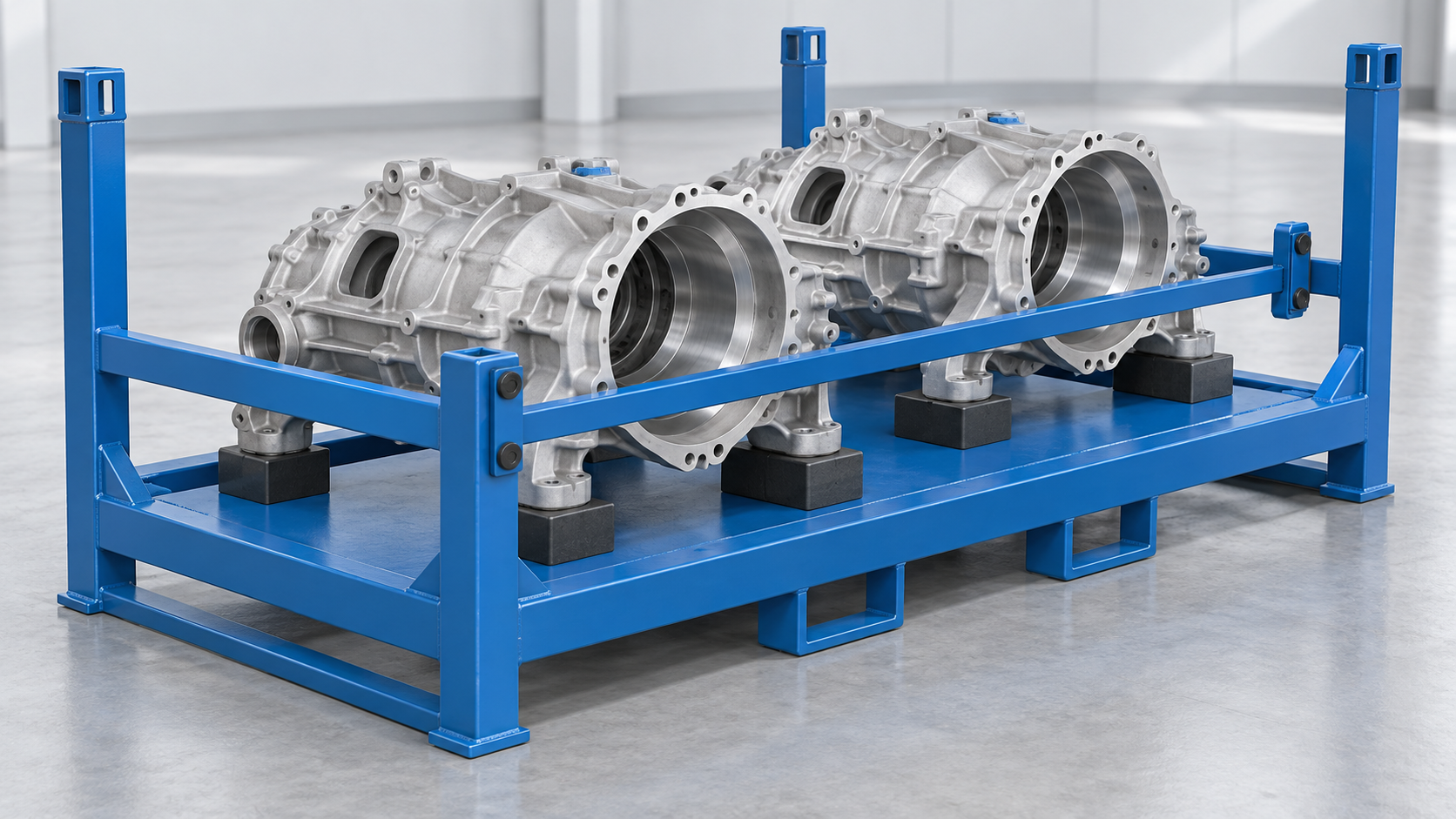
For a concentrated load, choose a steel pallet's feet or runners from the complete support path, not from the pallet's gross weight alone. Locate the machine or casting's bearing points on the deck, trace the force through the cross-members, and identify where the base actually lands on the floor, rack beams or transfer equipment. Discrete feet need suitable landing locations beneath them; runners need a compatible continuous support path and direction of travel. Fork access, stacking and equipment clearance must also work in the same orientation.
A pallet carrying a heavy housing on two small mounting pads behaves differently from one carrying an evenly spread box, even at the same total mass. Virginia Tech's unit-load research distinguishes loading and support conditions; it does not provide a transferable rating for a custom HAOFU steel pallet. The buyer's job is to provide the real contact map so the supplier can design and validate the correct configuration.
Feet and runners hand the load off differently
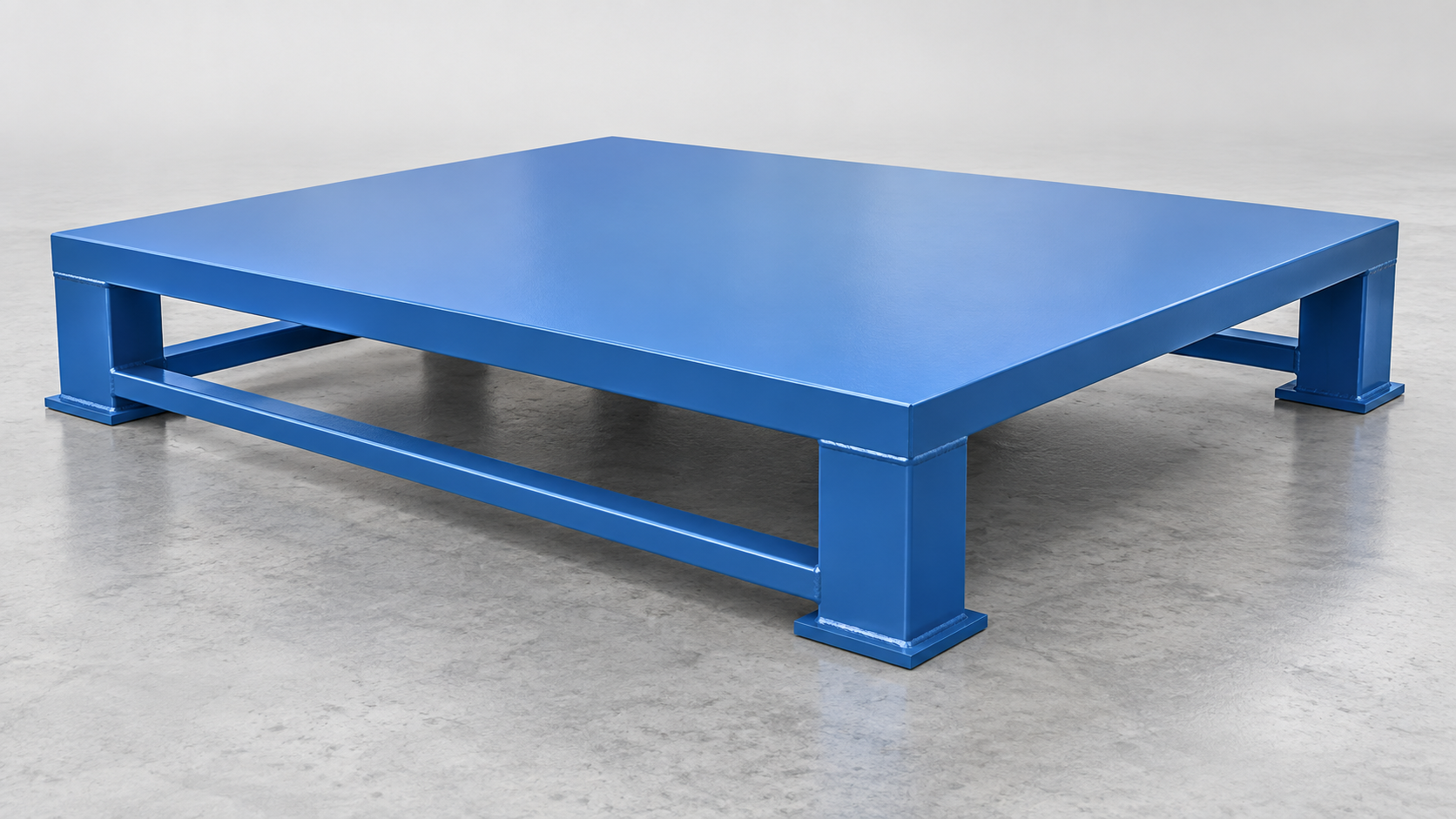
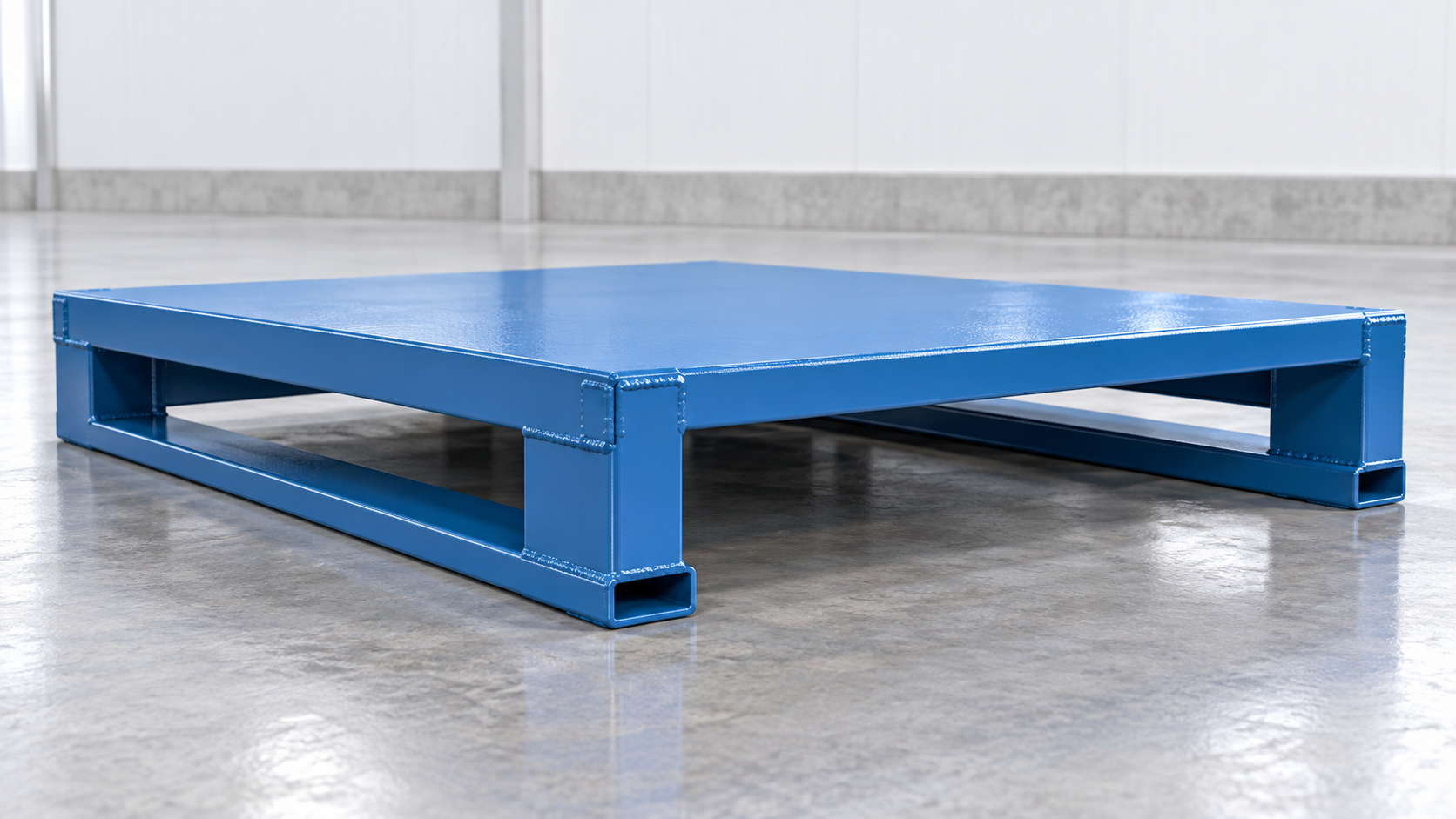
Four or more feet can leave clear spaces under a platform and offer known landing points. But if a rack beam or conveyor support misses a foot, the assumed load path is wrong. Two continuous runners can create longer support lines, but their direction, fork entry and the receiving equipment's openings may create a different conflict. Neither option solves a localized deck load by itself: the deck and cross-members must still connect the cargo contact to the base.
| Condition to confirm | Discrete feet: ask | Continuous runners: ask |
|---|---|---|
| Concentrated cargo contact | Does each loaded region transfer into a supported foot through the deck? | Do deck members transfer the load into the runners without unsupported spans? |
| Floor or rack-beam landing | Will every foot land on the intended surface in each orientation? | Will each runner align with the support and avoid gaps or obstructions? |
| Forklift and transfer path | Are the gaps and feet compatible with the actual fork approach? | Do runner direction and clearance suit forks, pallet jacks or conveyors? |
| Loaded stacking | Are upper/lower contacts and location features defined? | Are runner-to-pallet contacts and alignment features defined? |
Trace the force from cargo to receiving support
The receiving structure matters as much as the steel pallet. RMI explains the difference between point and uniformly distributed loads on rack systems. If a pallet will sit on beams, send the rack owner a drawing of the base and obtain the site's support criteria; do not infer approval from the pallet's mass or the beam's headline capacity. The steel pallet load-capacity guide explains how static, dynamic and racking terms differ.
Five steps before approving the base layout
- Map the cargo contact. Provide the item's drawing, mass, centre-of-gravity estimate and exact feet, skids or mounting pads that touch the deck.
- Map every receiving support. Show floor storage, rack-beam spacing, conveyor or shuttle contact lines and any loaded stacking condition.
- Map the handling route. Record real fork size and approach, pallet-jack or automated interface, turning and transfer direction.
- Compare the load paths. Ask for a feet and/or runner proposal showing deck reinforcement, base contacts and areas where support could be lost.
- Validate the selected configuration. Agree on the drawing, sample or calculation/testing method and site acceptance criteria with the responsible owners.
For detailed fork-entry geometry, see the forklift handoff guide. If the pallet meets an automated system, use the AS/RS interface guide as a separate check. Supplier catalogues such as Morrison's steel-pallet overview show possible formats but do not determine your site's foot or runner support geometry.
Request a steel pallet layout for your load
HAOFU develops custom steel pallets around a defined unit load and handling route. Send the cargo contact sketch, gross mass, support surfaces, rack or conveyor drawing, fork approach, quantity and acceptance criteria through the steel pallet engineering RFQ. We can compare a feasible feet or runner starting layout against those inputs; your equipment owners should confirm the interfaces before release.
Frequently Asked Questions
- Are runners stronger than feet on a steel pallet?
- Not as a universal rule. Strength and suitability depend on the complete pallet design, where the cargo loads the deck and where the base is supported. Request a design review for the actual load and route.
- When should I consider discrete pallet feet?
- Consider feet when the floor, rack or handling equipment provides defined landing points under every proposed foot and the deck can transfer the load to those points.
- When should I consider continuous runners?
- Consider runners when a longer support line suits the receiving surface and the runner direction remains compatible with fork entry, conveyors, storage and transfer.
- What changes if the pallet will sit on rack beams?
- The rack owner needs the actual base contact drawing and load case. Check where each foot or runner meets the beams and obtain the site's acceptance criteria before approving the pallet layout.
- What information should a steel pallet RFQ include?
- Include the cargo contact footprint, gross mass, centre-of-gravity estimate, deck orientation, floor or rack support geometry, fork approach, transfer equipment, stacking condition, quantity and validation requirements.