Stillage Rack Load Ratings & Stacking Safety Standards

A stillage rack has a single-unit load (what one holds) and a separate stack load (what the bottom unit bears from units above). The safe stack height equals the stack-load rating divided by one loaded unit's weight, with a safety margin.
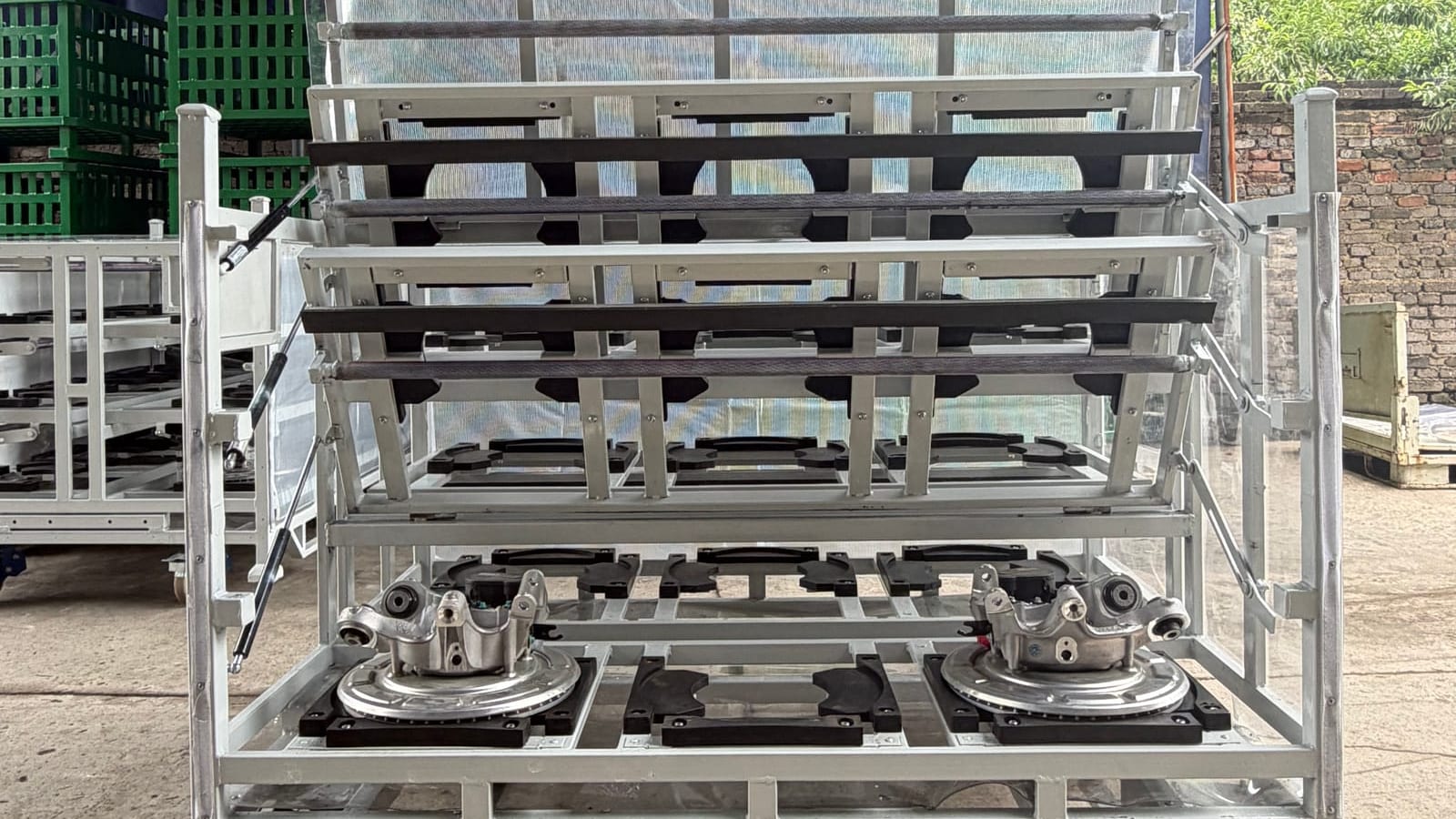
A stillage rack carries two different loads you must not confuse: the single-unit load (what one stillage holds) and the stack load (what the bottom unit must support with loaded stillages stacked on top). The safe stack height depends on both — get it wrong and a stack can crush or topple.
Quick answer: the two load ratings
A stillage rack carries two distinct ratings: the single-unit load (the weight of parts one stillage holds) and the stack load (what the bottom unit bears from loaded units above). Safe stack height equals the stack load divided by one loaded unit's weight, plus a safety margin, ideally validated by load-testing a sample.
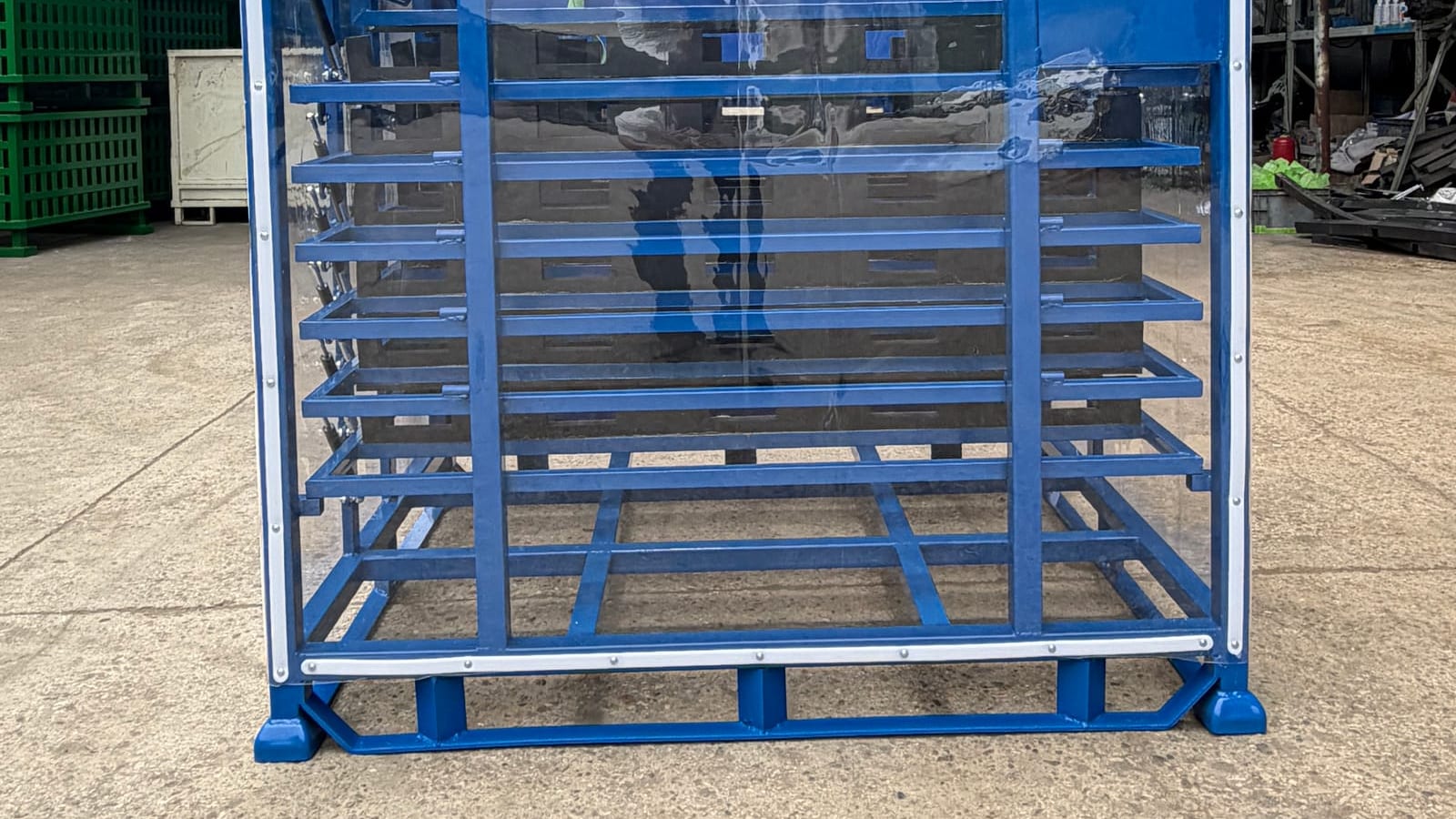
The two load ratings
| Rating | Meaning |
|---|---|
| Single-unit load | Maximum weight of parts one stillage holds |
| Stack load | Weight the bottom stillage must bear from units stacked above |
| Safe stack height | How many loaded units can stack, set by the stack load ÷ unit weight, with a safety margin |
Stacking safety factors
- Rate the bottom unit for the full weight of everything stacked above it, not just one unit.
- Apply a safety margin so the stack tolerates uneven loading and handling shocks.
- Interlock the feet so stacked units cannot slide or walk apart.
- Post the safe stack height clearly so operators never over-stack.
Safe stacking, handling and storage of loaded stillages should follow recognised OSHA materials-handling practice, and load ratings should be validated with test methods aligned to ISO pallet/container standards. We build and load-test a sample before mass production.
Related reading
New to stillages? Start with what is a stillage rack, and compare the three load ratings on pallets in our steel pallet load-capacity guide.
Get a rated, tested stillage
HAOFU engineers each stillage rack to your single-unit and stack loads, then load-tests it. Send us your load and stack height and we will spec the safe rating.
Frequently Asked Questions
- What is the difference between single-unit load and stack load?
- The single-unit load is the maximum weight of parts one stillage holds. The stack load is the weight the bottom stillage must support from all the loaded units stacked on top of it — which is why the bottom unit is rated for far more than one unit's contents.
- How do I work out the safe stack height for stillages?
- Divide the bottom unit's stack-load rating by the weight of one loaded stillage, then apply a safety margin. The result is how many loaded units can safely stack. Always post that limit so operators never over-stack.
- Are stillage load ratings tested?
- They should be. A credible rating comes from a physical load test aligned with recognised pallet/container test methods, not just a spec sheet. HAOFU builds and load-tests a sample before mass production.
- What safety factor should a stillage rack have?
- A margin above the calculated maximum so the stack tolerates uneven loading and handling shocks. The exact factor depends on the load and application; we engineer and test to a safe factor and handle to OSHA materials-handling practice.
- Why must stacked stillage feet interlock?
- Stacked stillage feet interlock so loaded units cannot slide or walk apart during handling or transit. Combined with rating the bottom unit for the full weight of everything above it and applying a safety margin, interlocking feet keep a stack stable rather than shifting or toppling. Always post the safe stack height as well, so operators never over-stack a rated stack.