What Is an Automotive Parts Rack? Types, Uses & How to Choose

An automotive parts rack is a custom steel structure that stores, protects and moves vehicle components through a plant and along returnable supply chains. The main types are stillage racks, stackable racks, foldable racks, mesh containers and steel pallets — chosen by part weight, protection needs and how the rack is handled and returned.
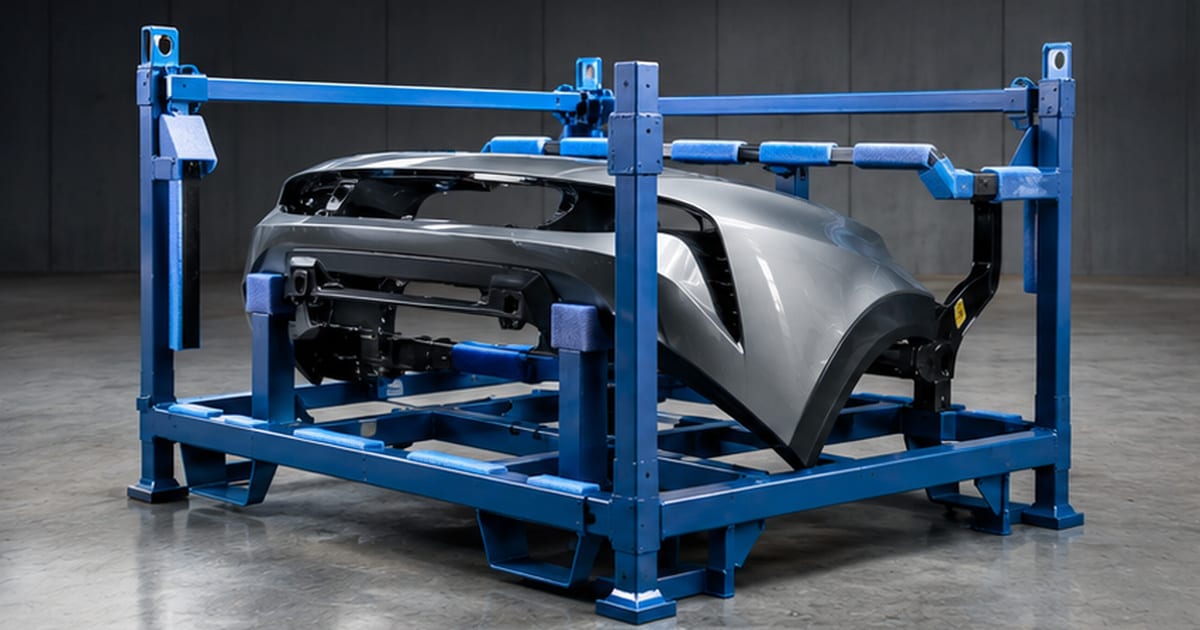
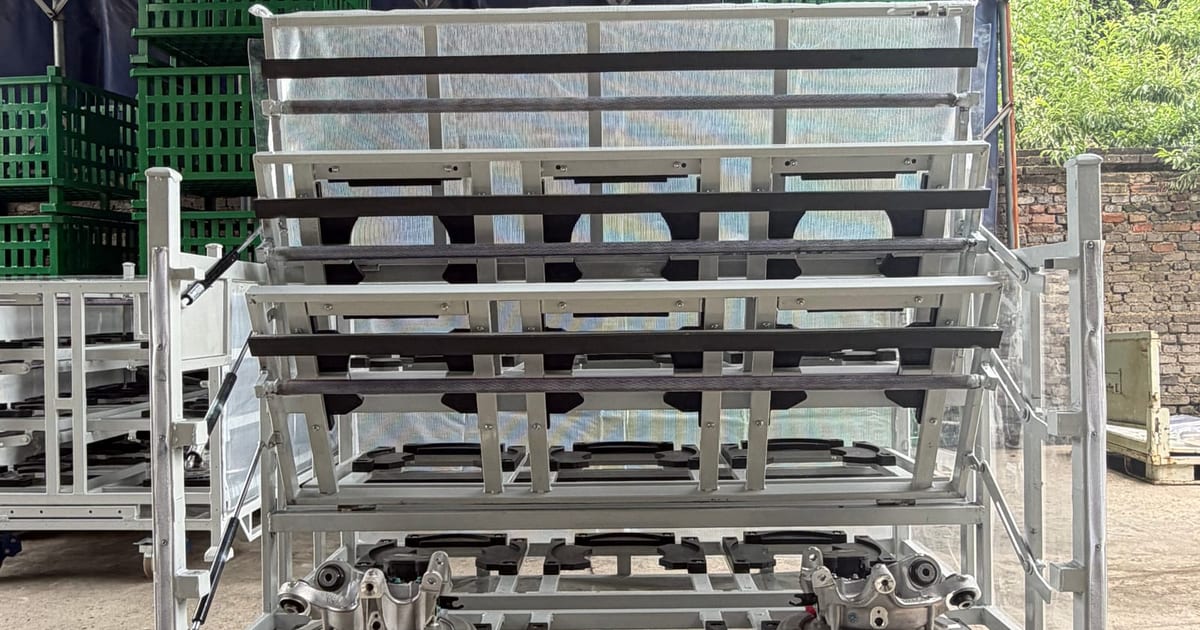
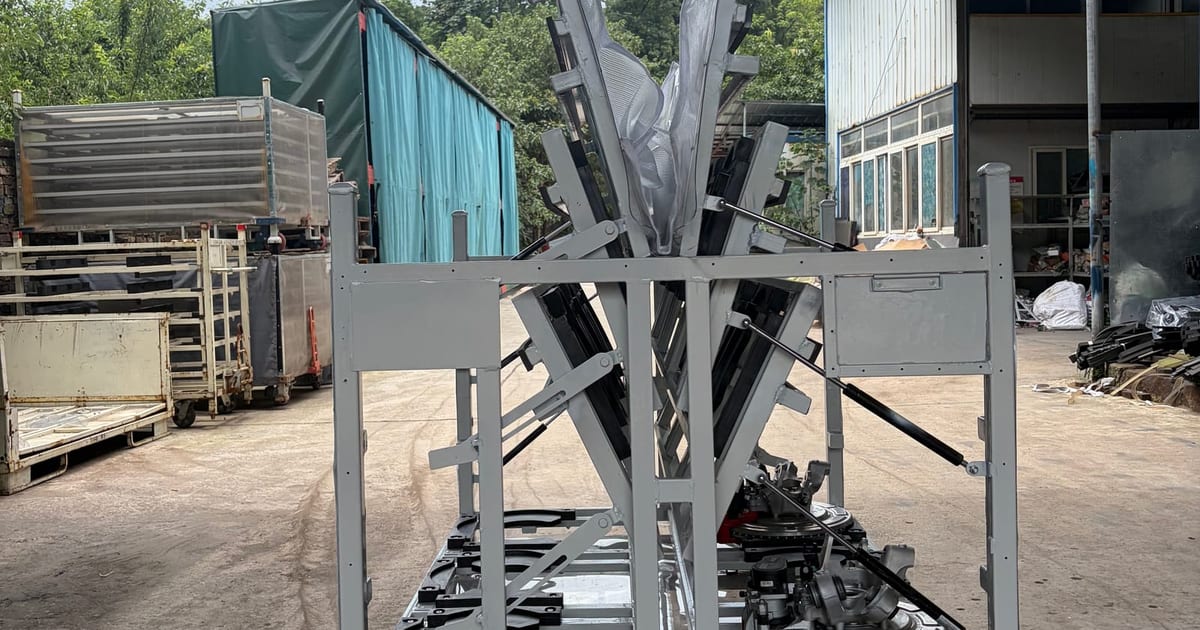
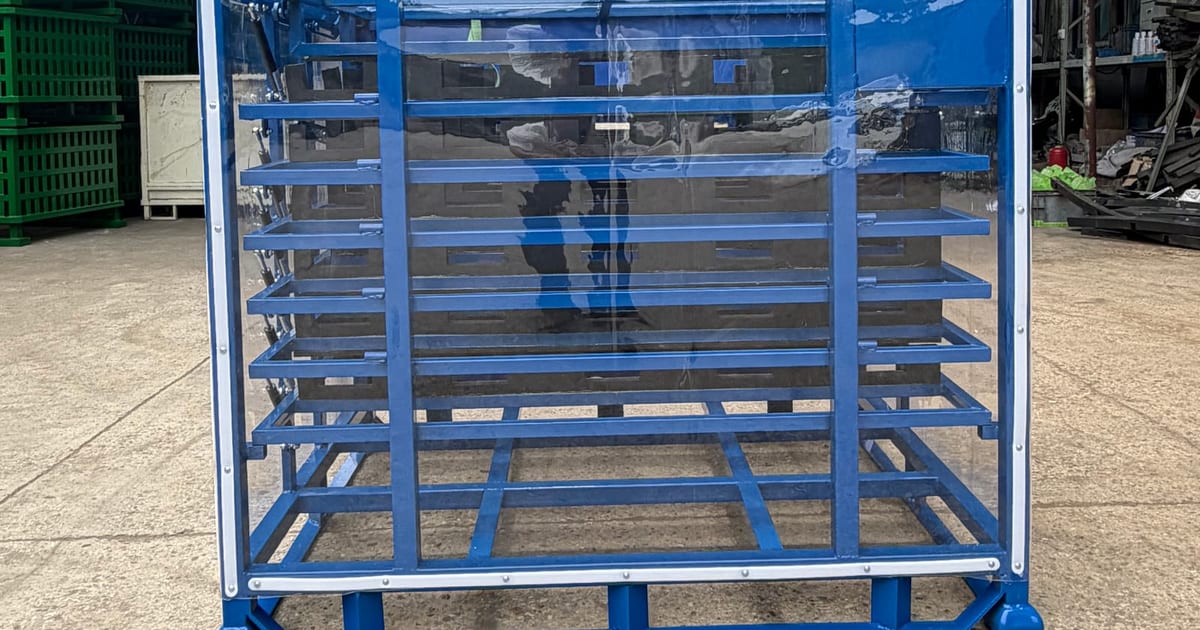
What is an auto parts rack? An automotive parts rack is a custom steel structure that stores, protects and moves vehicle components inside a plant and along returnable supply chains. Unlike a flat pallet, it is engineered around the part — with posts, dividers, cradles and protection so the component is held securely, handled easily and returned for reuse without damage. Understanding the main types of automotive material racks makes it far easier to choose the right one.
What is an automotive parts rack used for?
Automotive parts racks handle components a plain pallet cannot support safely. Typical uses include:
- Storing body panels, bumpers, instrument panels, glass, engines and gearboxes
- Moving parts between stamping, welding, paint and assembly
- Returnable transport between Tier-1 suppliers and OEM plants
- High-density buffer storage when racks are stacked several high
Types of automotive material racks
| Type | Best for |
|---|---|
| Stillage rack | Heavy or awkward parts needing a strong contained frame |
| Stackable rack | Dense vertical storage of loaded units to save floor space |
| Foldable / collapsible rack | Returnable loops where empty return freight must be cut |
| Wire mesh container | Smaller loose parts needing visibility and ventilation |
| Steel pallet | Flat, very heavy loads handled by forklift and racking |
For a deeper split of related styles, compare stillage vs pallet vs wire container and read what a stillage rack is.
How to choose the right automotive parts rack
Match the rack to the part and the process, not the other way around. Check:
- Part data — dimensions, weight, centre of gravity and fragile faces
- Load — single-rack load plus any stacking load above
- Handling — forklift pockets, casters or tugger tow bars
- Protection — EVA foam, rubber pads, plastic blocks or dividers
- Stack / fold — to save storage and return-freight space
- Finish — powder coat indoors, galvanizing for outdoor or wash-down
Returnable, reusable automotive packaging is encouraged by industry bodies such as the Reusable Packaging Association, and automotive returnable-container labelling follows Odette standards.
Custom vs standard racks
Standard cages fit general storage, but automotive parts usually need a rack designed around the component. As a custom automotive parts rack manufacturer, HAOFU develops the structure from your drawings, builds a sample and load-tests it before mass production. See the range on our automotive parts racks page or watch a smart automotive parts rack in action.
Not sure which type fits your parts? Send us your drawings and our engineers will recommend the right rack within 24 hours.
Frequently Asked Questions
- What is an automotive parts rack?
- An automotive parts rack is a custom steel structure that stores, protects and moves vehicle components inside a plant and along returnable supply chains. Unlike a flat pallet it is engineered around the part — with posts, dividers, cradles and protection — so the component is held securely, handled easily and returned for reuse without damage.
- What are the main types of automotive material racks?
- The main types are stillage racks (strong contained frames), stackable racks (dense vertical storage), foldable racks (collapse to cut return freight), wire mesh containers (visibility and ventilation for small parts) and steel pallets (flat, very heavy loads). Each is chosen by part weight, protection needs and how the rack is handled and returned.
- How do I choose the right automotive parts rack?
- Match the rack to the part and the process: use part data (size, weight, fragile faces) to narrow the type, size the structure to the single-rack plus stacking load, choose a handling base (forklift, casters or tugger), add protection where the part touches steel, and decide whether it should stack or fold. Confirm with a load-tested sample before volume.
- What is the difference between an automotive parts rack and a pallet?
- A pallet is a flat deck that supports a load from below; an automotive parts rack has a built-up structure — posts, sides, dividers and cradles — that also contains and protects the part and allows safe stacking. Racks suit heavy or awkward components that a flat pallet cannot hold securely.