Metal Turnover Boxes for Rubber, Molded and Small Parts

1) Freeze the real part and contact zones. 2) Select separators, liners and access around loading and picking. 3) Review cleaning, loaded handling and empty nesting or return. 4) Validate the complete cycle; a generic box or photograph cannot prove universal suitability.
Direct answer: A metal turnover box for rubber parts, molded parts or small components should be built around the part's shape, contact surfaces, release or picking method, cleaning routine and return loop. Separators, liners and access features are not decorative add-ons: they determine whether parts stay separated, can be removed without awkward handling and return with the container. The correct design must be validated with the real part and route.
This application guide is different from a definition of a metal turnover box, a general container-design article or a metal-versus-plastic comparison. It focuses on the packaging questions that become important when parts can deform, mark, nest together, carry oil or debris, or require one-at-a-time presentation. It does not assign a universal size, payload, stack height, price, life or certification.
Start with part behaviour, not the box name
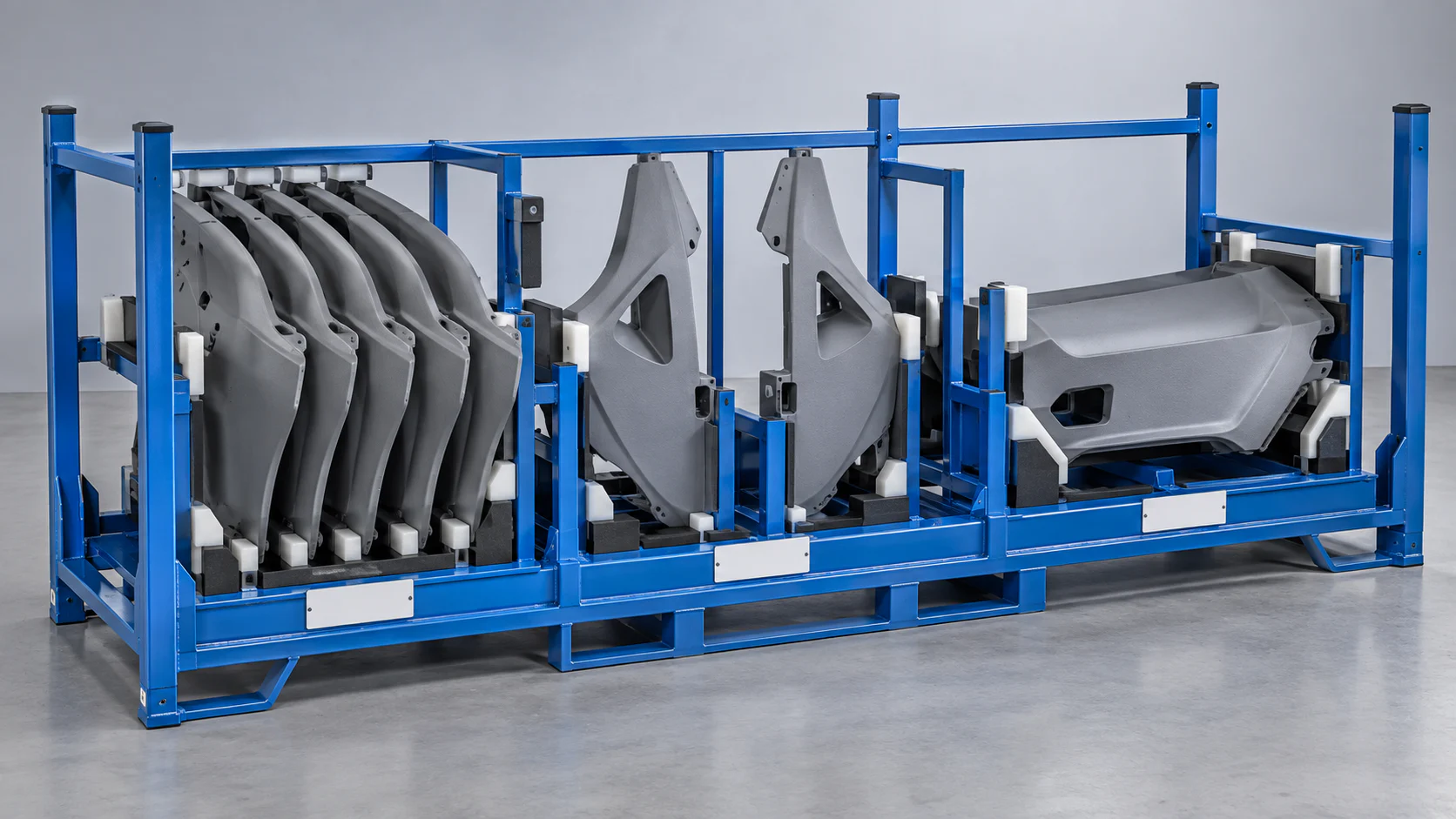
Rubber parts may have flexible walls, sealing faces or a shape that changes when compressed. Molded parts may have gates, ribs, cosmetic faces or a defined orientation. Small metal parts may be dense, sharp-edged, oily or easy to mix. Those descriptions are prompts for engineering questions, not universal material conclusions. Record the actual part revision, contact points, surface restrictions, quantity per unit and the reason a separator or liner is needed.
| Part profile | Questions to answer | Evidence to send |
|---|---|---|
| Rubber parts | Can the part be compressed, folded, trapped or marked? Must a sealing or appearance face remain clear? | Part sample or photos in the loaded orientation, contact restrictions and pick sequence. |
| Molded parts | Which face is cosmetic? Are there ribs, gates, clips or protrusions that need clearance? | Current drawing, revision, allowable contact zones and any existing dunnage. |
| Small metal parts | Can parts touch, tangle, roll, cut a liner or mix between variants? Is oil or debris present? | Quantity, finish condition, part-family mix, cleaning requirement and label method. |
| Mixed or changing parts | Do separators need to be removable, reconfigurable or mistake-proof? | Part matrix, change frequency, divider storage plan and approval owner. |
Choose the separator and liner as a system
A separator controls position and access; a liner changes the contact surface or catches debris; a lid or cover changes containment and handling. MHI describes dunnage as devices used to secure or brace products and includes reusable formed inserts among the options. In a custom steel box, ask whether the protection should be fixed, removable, replaceable, washable or returned with the container.
| Decision | Useful when | Check before release |
|---|---|---|
| Fixed separator | The part presentation and quantity are stable. | Access, cleaning, part revision and repair or replacement route. |
| Removable separator | Several variants share a box or cleaning requires open surfaces. | Storage, correct reinstallation and the risk of missing components. |
| Replaceable liner or pad | Contact surfaces need a controlled interface or the liner is a wear item. | Retention, replacement specification, cleaning chemistry and inspection. |
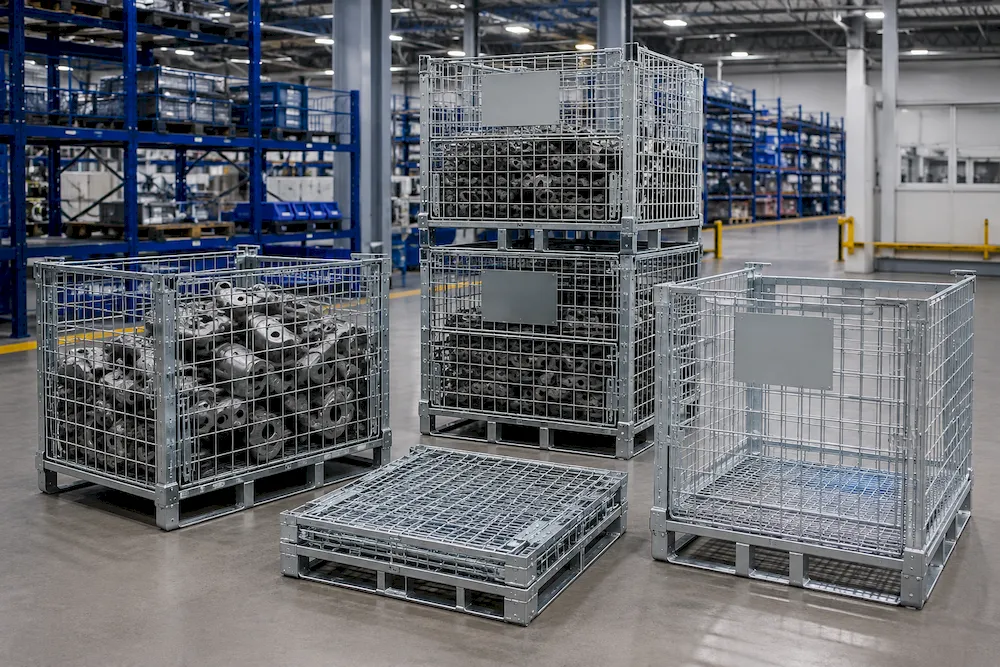
| Open mesh or solid enclosure | Visibility, ventilation, containment or debris control drives the choice. | Small-part retention, snag points, wash-down access and label visibility. |
Do not say that a particular foam, rubber, plastic or fabric is suitable for every rubber or molded part. Confirm compatibility with the part surface, temperature, oil, cleaning method and contact pressure with the responsible technical owner.
Access, picking and cleaning are part of protection
A box that protects the part but forces operators to dig, tilt or reach around a divider may fail the actual process. Define whether the operator loads from the top, side or front; whether the part is picked one at a time; and whether a door, drop-down panel, removable post or open face is needed. Keep labels visible at the point of use and prevent separators from blocking an inspection view.
Cleaning should be described as a route, not as a marketing adjective. State whether the box is wiped, washed, blown out or inspected, and where water, oil or debris can leave the unit. The design should provide the access needed for that routine without claiming a generic hygienic or corrosion performance.
Nesting, stacking and the empty return condition
Loaded stacking and empty nesting answer different questions. A loaded unit must transfer the actual load through the intended structure and handling route. Empty nesting asks whether units can fit together after the parts, separators, liners and lids have been removed or secured. If a liner stays in place, it may reduce clearance; if it is removed, it needs a controlled storage location.
RPA describes reusable transport packaging as a system of pallets, containers and dunnage designed for repeated use. Apply that system view to the empty return: record who counts the boxes, who cleans them, who replaces damaged separators, how the next part family is identified and where empty units wait for redeployment. GS1's GRAI is one possible asset-identification reference for returnable transport items; use the identification method agreed by the operating partners.
Five-step application selection process
- Freeze the part brief. Record the current drawing, sample, orientation, contact restrictions, quantity and part-family mix.
- Mark the protection zones. Identify where parts may touch, where they must be separated and where operators need hand or tool access.
- Choose the container features. Compare solid or mesh sides, separators, liners, lids, doors, handling interfaces and labels against the route.
- Review loaded and empty states. Check picking, cleaning, nesting or stacking, divider storage and empty return with the intended equipment.
- Validate the real cycle. Load the real parts, run a representative movement and picking sequence, record changes and approve the drawing revision.
Common mistakes with small-part turnover boxes
- Using one generic divider pattern for rubber parts, molded parts and metal components with different contact risks.
- Choosing a liner before checking oil, cleaning, temperature, replacement and debris requirements.
- Making separators permanent when part revisions or mixed variants are expected.
- Checking only a full box and forgetting the empty nesting, lid and accessory-return condition.
- Assuming a real product photo proves suitability for every small part or rubber compound.
- Hiding the part label behind a lid, frame, stack or removable panel.
What to send for a custom small-parts container quote
Send a part drawing or sample, photos of the current packaging, part quantity, orientation, contact and cosmetic zones, surface and cleaning restrictions, separator or liner preference, loading and picking method, handling equipment, label rules, loaded and empty return route, and any variant or revision plan. The custom metal containers page is the relevant product path.
For the category and basic selection logic, read what a custom metal turnover box is. For dividers, lids and nesting, see custom metal container design. For a material-level comparison, use metal container vs plastic bin. The companion VDA KLT outer-container guide explains how an inner carrier and an outer steel frame should be kept distinct.
Technical references
- MHI Packaging Overview
- Reusable Packaging Association: Reusable Transport Packaging
- Southern Perfection custom dunnage overview
- GS1 Global Returnable Asset Identifier (GRAI)
Request a custom packaging quote: send the part and route through HAOFU customization. Include the steel box, separator, liner, access and empty-return requirements in the project specification.
Frequently Asked Questions
- What makes a metal turnover box suitable for rubber parts?
- Suitability depends on the actual rubber part's shape, compression sensitivity, contact surfaces, orientation, cleaning route and picking method. The box may need separators, liners or replaceable pads, but those features must be selected and validated with the real part rather than assumed from the material name.
- How should a molded parts container protect cosmetic faces?
- Mark the cosmetic and no-contact zones on the drawing, then position separators or dunnage so the part is retained without blocking access. Validate the loading and picking sequence, contact pressure, liner condition and approved part revision before release.
- Should separators in a small parts steel box be fixed or removable?
- Use fixed separators when the part presentation is stable and removable separators when variants, cleaning or reconfiguration justify them. In either case, define storage, replacement, correct reinstallation and inspection so components are not missing at the next cycle.
- Are loaded stacking and empty nesting the same requirement?
- No. Loaded stacking checks the load path and handling condition with parts inside. Empty nesting or stacking checks how boxes, separators, liners and lids are stored and returned after unloading. Both conditions need their own review.
- What information does a supplier need for a rubber or molded-parts container?
- Provide the current part drawing or sample, photos, quantity, orientation, contact and cosmetic zones, oil or cleaning restrictions, separator or liner preference, loading and picking method, handling equipment, labels, return route and any part-family changes.