VDA KLT Containers: What a Custom Steel Outer Container Must Accommodate

1) Confirm the KLT family and revision. 2) Check seating, lid, handle, label and removal interfaces. 3) Map loaded handling, stacking and empty return. 4) Treat VDA and ESD approval as separate project requirements; the steel outer unit is not the KLT itself.
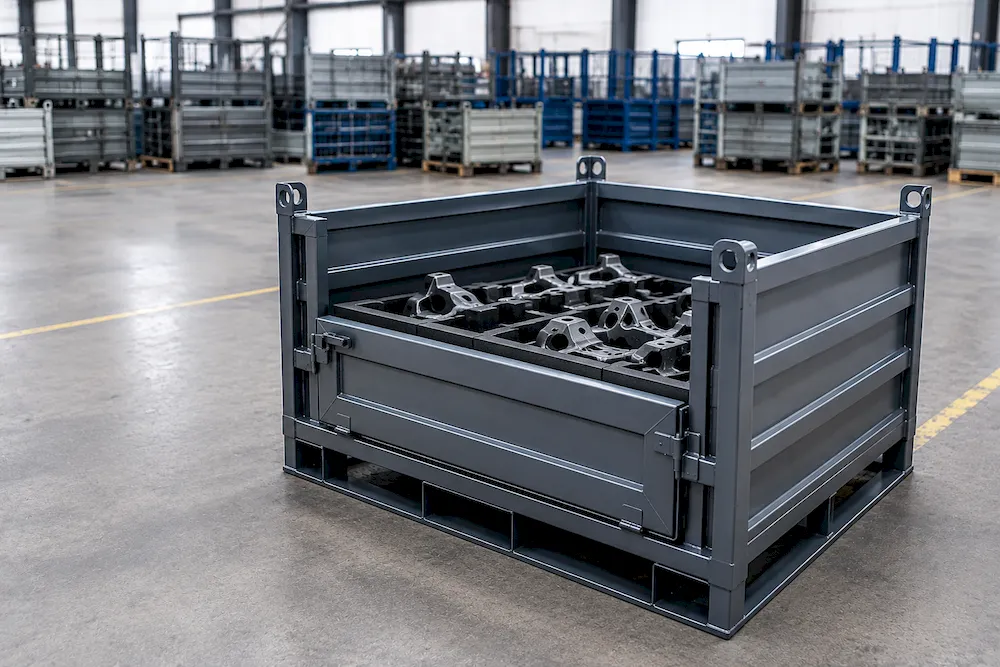
Direct answer: A VDA KLT container outer rack is a steel support or enclosure designed around a specified KLT inner container, not a replacement for that KLT. Before quoting, confirm the KLT family and revision, the seating and removal interfaces, lid and label clearances, loaded handling equipment, empty-return method and any separate ESD or plant requirements. HAOFU can develop a custom steel outer container from those project inputs, but the article does not claim VDA or ESD certification for HAOFU products.
VDA describes its KLT system as a modular, mechanically and manually handleable system for automotive logistics. The current VDA publication should be treated as the source for the applicable container family, interfaces and plant-specific interpretation. The outer steel frame must accommodate that real inner container and the receiving site's process rather than relying on a generic “KLT-compatible” label.
VDA KLT, outer container, turnover box and rack are different
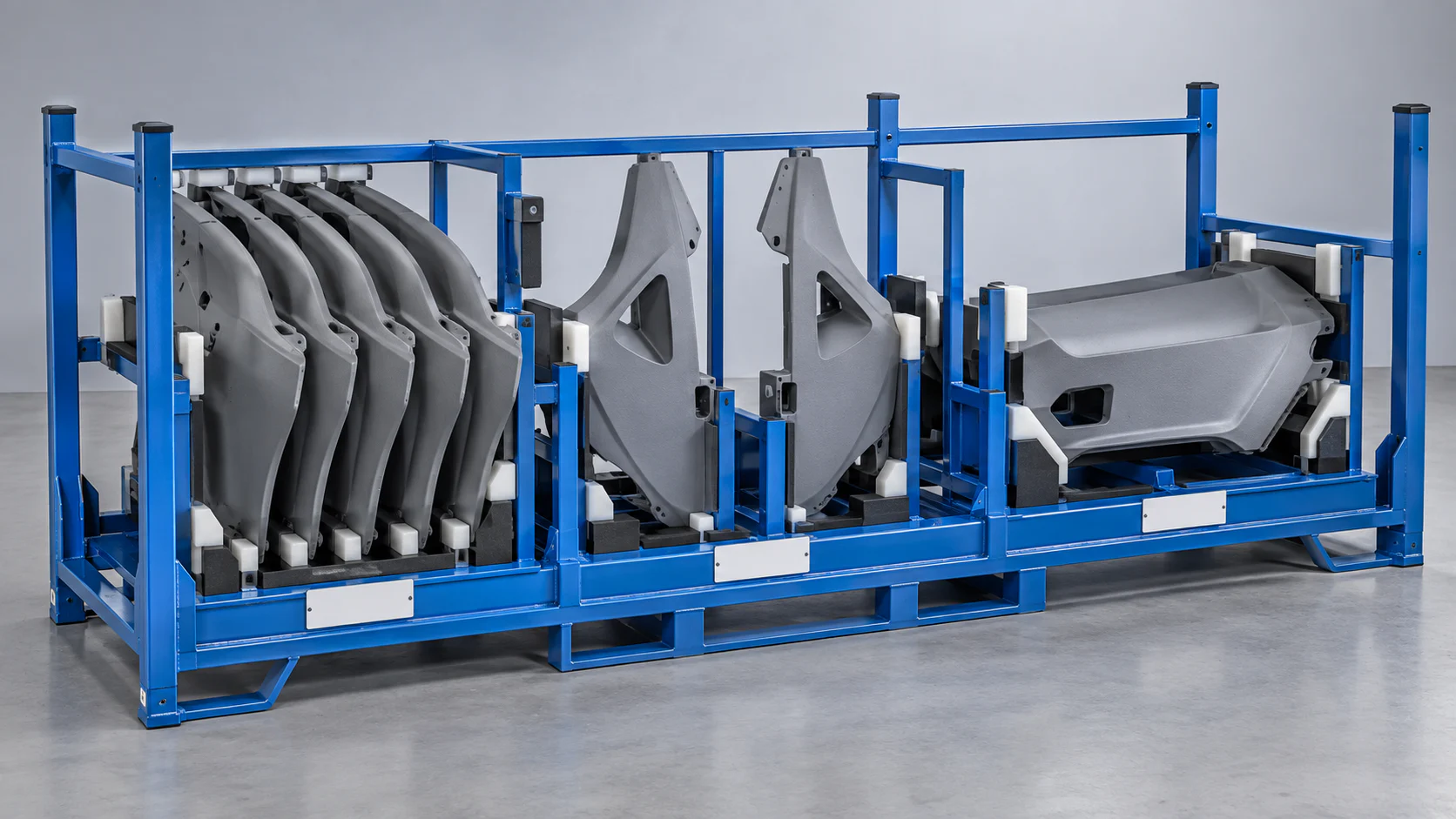
These terms are often mixed in RFQs, which creates avoidable design ambiguity. The KLT is the inner small-load carrier that holds the parts. A steel outer container or outer frame surrounds, supports or groups one or more inner units. A metal turnover box is a broader returnable container category that may hold parts directly or use dunnage. A rack is a storage or transport structure whose levels, posts, doors or bases are engineered for the load carrier and route.
| Item | Primary job | What the steel design must not assume |
|---|---|---|
| KLT inner container | Holds and presents the automotive small parts. | Do not assume the type, lid, footprint, side handles or ESD status without the exact source specification. |
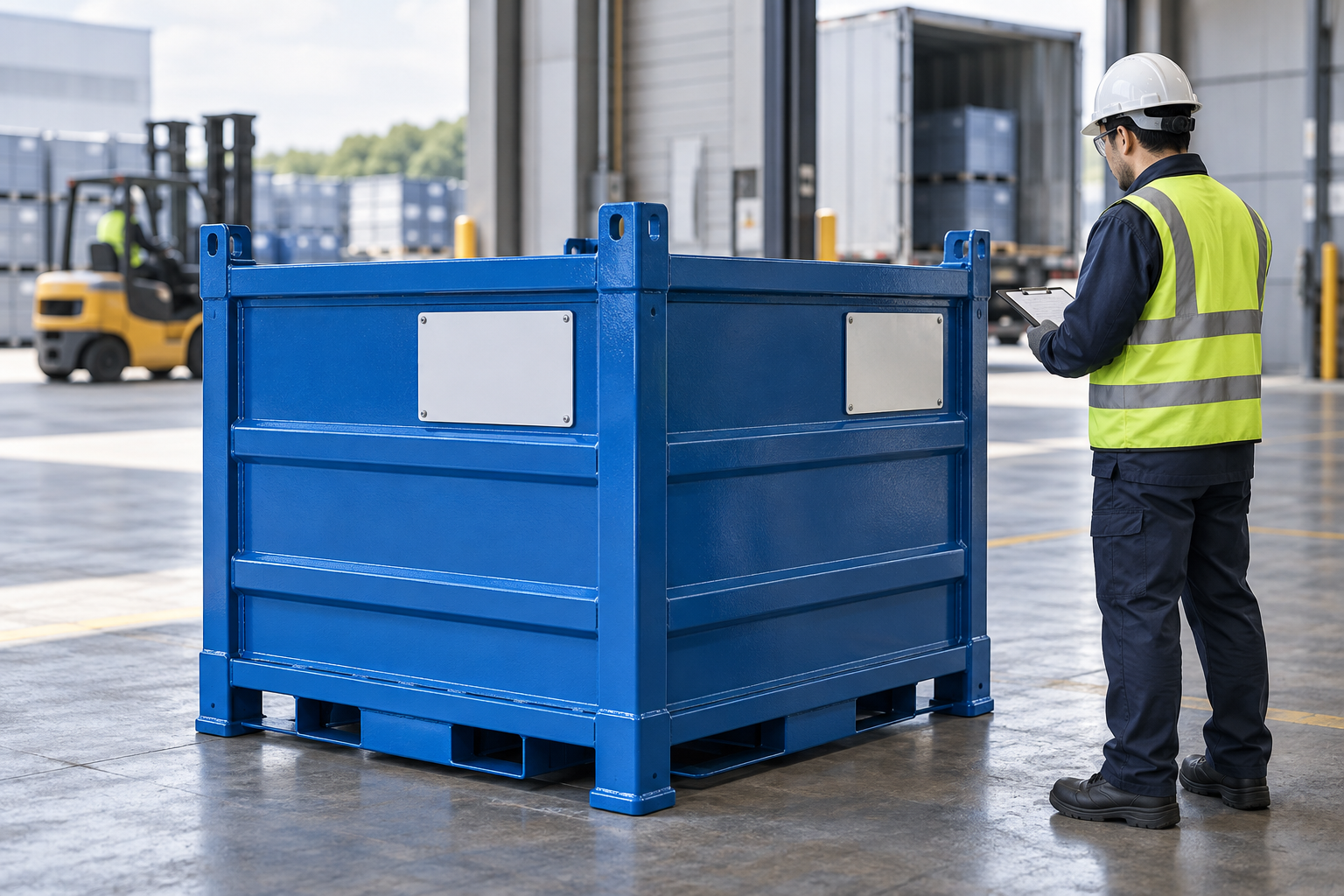
| Steel outer container | Supports, retains, protects or groups the inner carrier. | Its steel construction does not automatically make the inner carrier VDA- or ESD-compliant. |
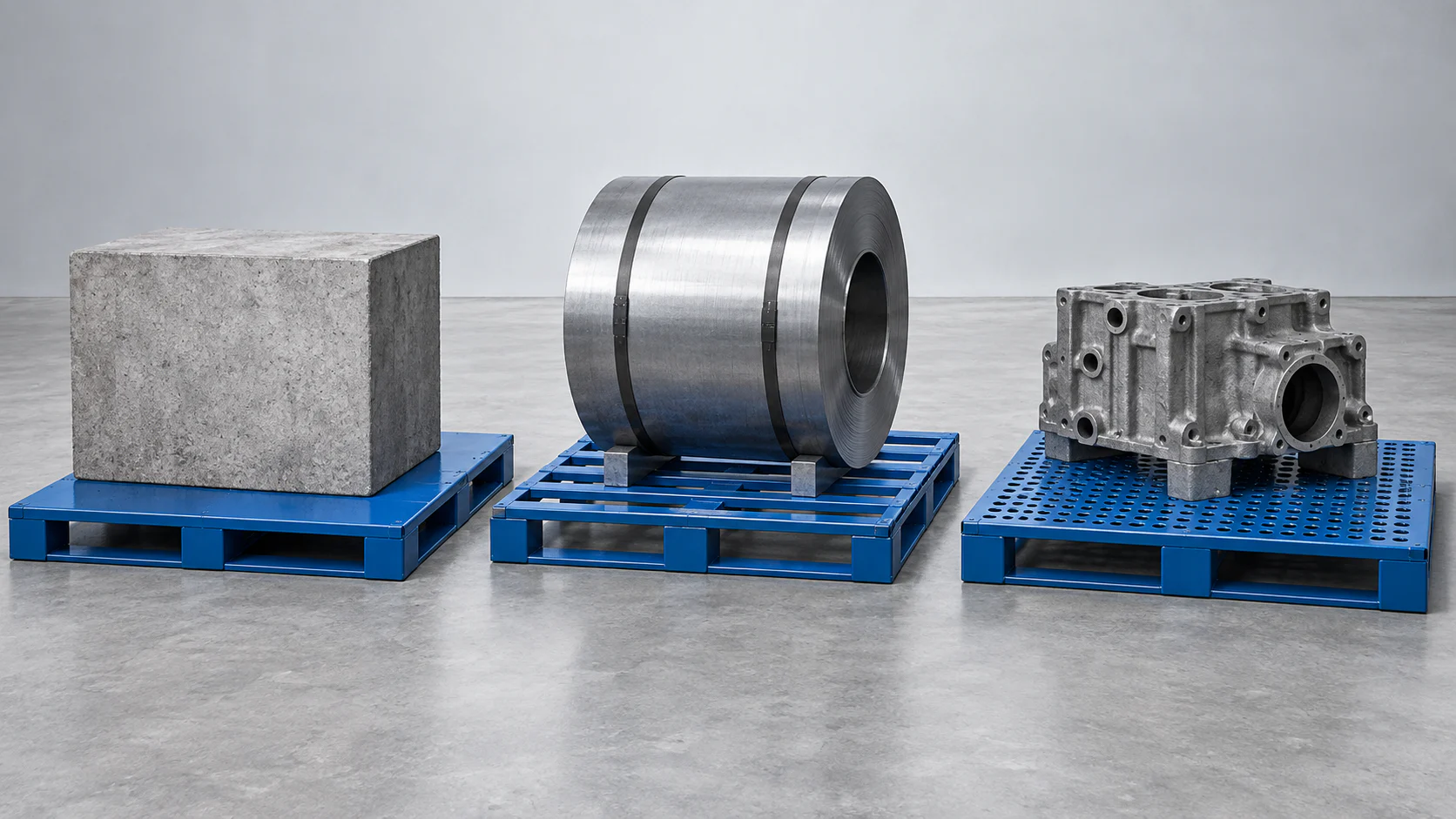
| Metal turnover box | Reusable container for repeated part movement and storage. | It is a functional category, not proof that it accepts a specific KLT family. |
| Rack or stillage | Provides structure for handling, stacking, storage or line-side presentation. | Do not treat a rack's general handling features as proof of a KLT interface. |
What a custom steel outer container must accommodate
1. Inner-container seating and retention
Show how the R-KLT container, ESD-KLT container or other specified KLT sits in the outer unit. Record the bearing surfaces, locating points, insertion direction, removal clearance and any stop that prevents movement. If several KLTs share one outer frame, define the pitch, access to each unit and how an operator identifies the correct position.
2. Lids, handles and access
Confirm whether the KLT lid remains fitted during transport, whether it is opened at line side and where it is stored when removed. The outer frame must not block handles, label windows, lids, hand clearance or the operator's view. A retaining bar or cover should be specified only when its open position, latch and pinch-point review are understood.
3. Handling interfaces
Map every movement: supplier loading, forklift or pallet-truck handling, truck loading, warehouse storage, line-side presentation and empty return. MHI separates containers, dunnage and pallets by function; use that distinction to describe whether the steel outer unit is a container, a load-carrier frame or both. Do not publish a universal load, stack or fork specification without the actual project data.
4. Stacking and empty return
Loaded stacking, empty nesting and empty stacking are different states. Verify the load path, interlock or locating features, top clearances, removable parts and the method for separating empty units. If the KLTs are removed before return, document how the outer container is identified and protected from being mixed with another family.
5. Labels and asset identity
Reserve visible space for the part label, KLT identification, handling instruction, revision and the outer asset ID. GS1 identifies GRAI as a key suited to reusable transport items and optional individual tracking; it is a useful reference for the asset-identification discussion, not a requirement that every HAOFU container carries a GRAI. Agree the data carrier and ownership of the master record with the buyer.
6. ESD boundary
VDA 4504 addresses an electrostatically dissipative small-load-container system and includes approval and quality-assurance considerations. An ESD-KLT therefore needs its own specification and handling controls. A painted, galvanized or otherwise fabricated steel outer frame should not be described as ESD-compliant simply because it surrounds an ESD-KLT. Ask the responsible ESD engineer what must be controlled, tested and documented for the complete handling system.
VDA KLT outer-rack specification workflow
- Identify the inner carrier. Send the current KLT type, drawing, lid condition, quantity and part presentation requirement.
- Map the interfaces. Mark seats, stops, handles, access, labels, removal clearances and any shared frame positions.
- Map handling states. Describe loaded movement, line-side use, stacking, empty nesting or return and facility clearances.
- Separate standards from project requirements. Cite the current VDA document and receiving-plant instructions; list ESD requirements separately.
- Validate a representative sample. Use the real KLT, part, label and handling equipment, then approve drawing revisions before production.
Common mistakes when specifying a steel outer container
- Writing “VDA compatible” without naming the KLT family, revision or receiving-plant interface.
- Designing around the outside of an empty KLT while ignoring the lid, handle, label and part-access condition.
- Assuming a steel frame makes an ESD-KLT system compliant.
- Calling an outer frame a rack, turnover box and KLT interchangeably in the same RFQ.
- Approving loaded stacking without checking empty return, divider removal and accessory storage.
- Using a generic label location that is hidden when the unit is stacked or placed in a truck.
What to send for a VDA KLT outer-container quote
Send the KLT type and current drawing, photos of the actual lid and handles, part drawing or sample, parts per inner container, number of inner units per outer frame, handling equipment, label or asset-ID rules, loaded and empty routes, stacking or nesting intent, cleaning environment and any ESD instruction from the receiving plant. The custom metal containers page is the correct commercial path for a steel outer container review.
For the difference between a container and related load carriers, read what a metal turnover box is. For divider, lid and nesting decisions, see custom metal container design. The application guide for rubber, molded and small parts covers the protection questions that may sit inside the KLT.
Technical references
- VDA Small Load Carrier (KLT) System
- VDA 4504 ESD KLT publication
- GS1 Global Returnable Asset Identifier (GRAI)
- MHI Packaging Overview
Request a custom outer-container quote: send the KLT drawing, part information, quantity, handling method and route through HAOFU customization.
Frequently Asked Questions
- Is a VDA KLT container the same as a steel outer rack?
- No. The KLT is the specified inner small-load carrier; a steel outer container or rack supports, retains or groups it. The outer structure must be designed around the actual KLT type, access and handling route, and it does not automatically establish VDA conformity.
- What should a VDA KLT container outer rack accommodate?
- Confirm the inner KLT family and revision, seating and removal interfaces, lid and handle clearance, labels, loaded handling, stacking or nesting, empty return and any receiving-plant requirements. Treat ESD requirements as a separate engineering and approval question.
- Does a steel outer container make an ESD-KLT system compliant?
- No. An ESD-KLT has its own electrostatic-dissipation and quality-assurance requirements. A steel outer frame should not be described as ESD-compliant simply because it surrounds an ESD-KLT; the responsible ESD engineer must define and verify the complete system.
- Can one outer container hold several R-KLT containers?
- It can be designed that way when the actual KLT type, quantity, seating, access, labels, removal clearances and handling route support it. The shared frame should be reviewed with the real KLTs and parts rather than assumed from a nominal footprint.
- What should I send before requesting a KLT outer-container quote?
- Send the KLT drawing and photos, lid and handle details, part information, quantity per inner unit, number of inner units, handling equipment, label or asset-ID rules, loaded and empty routes, stacking or nesting intent and any ESD or receiving-plant instruction.