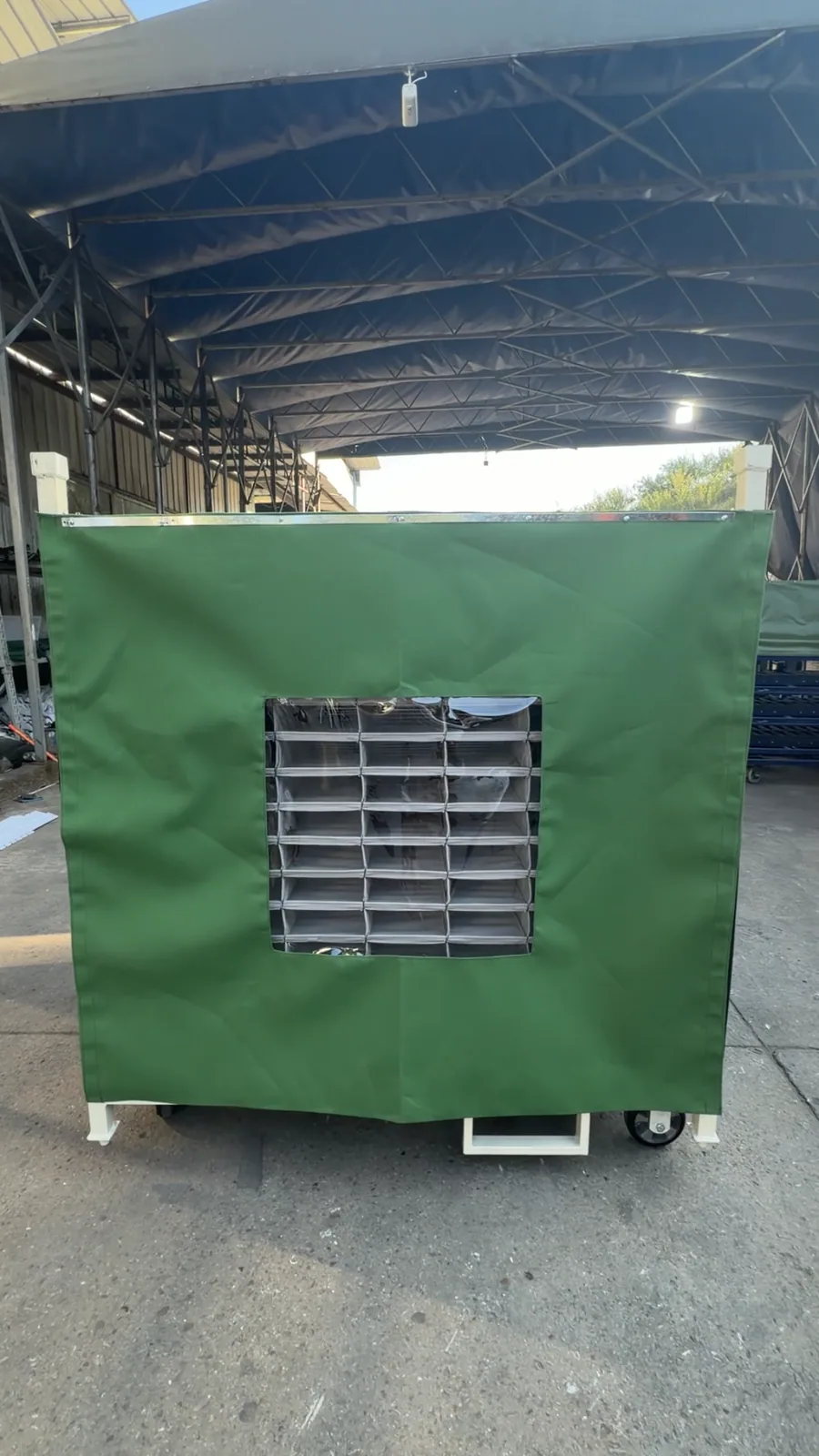
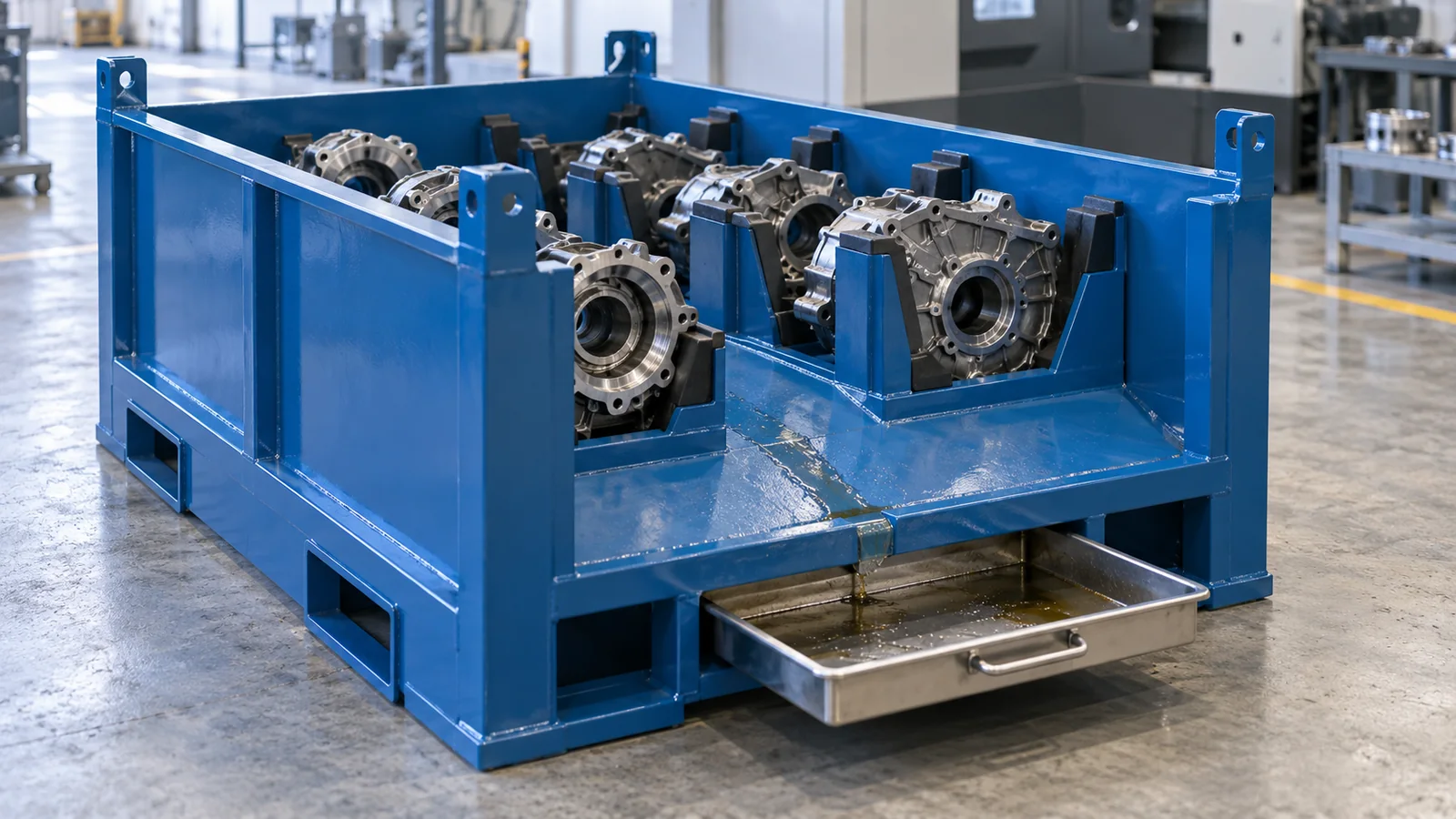
Stackable Racks or Pallet Racking? When Stacking Beats a Racking System

Stackable racks carry their own structure and stack on the floor, so they need no installation, move when your layout moves, and can travel loaded in a returnable loop. Pallet racking is a fixed structure built into the building that wins on vertical height and per-pallet selectivity. Choose stacking for changing layouts, leased space and transport; choose racking for dense, permanent, high-SKU storage.
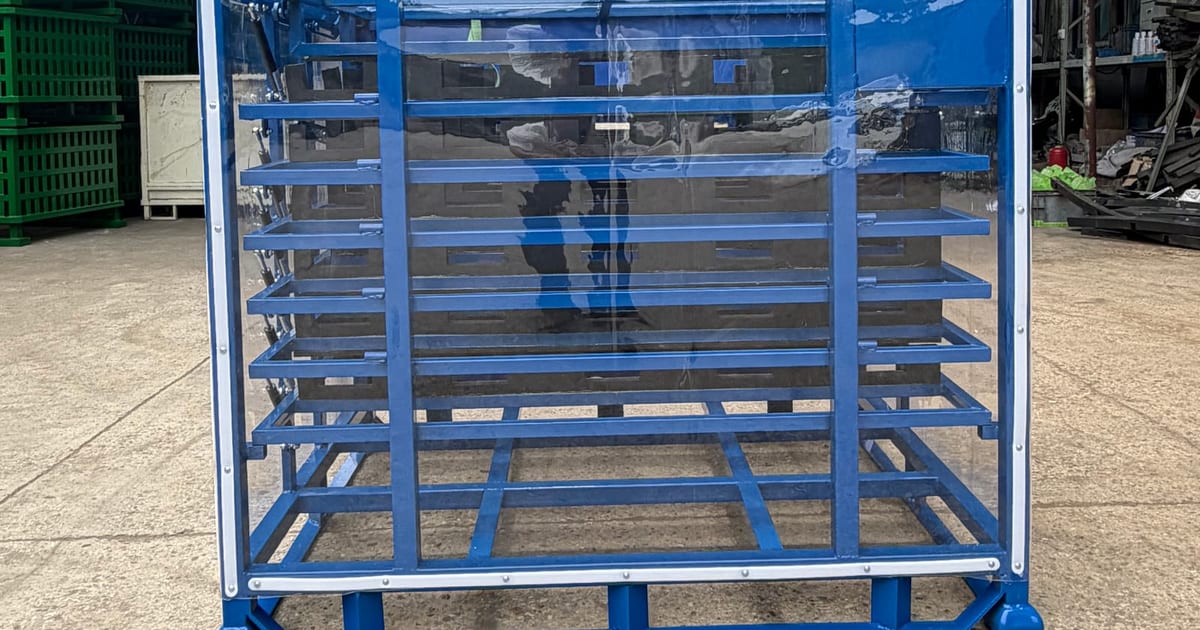
The choice between stackable racks vs pallet racking is not really a choice between two products. It is a choice between putting the structure in the building or in the unit load. Pallet racking is installed steel that stays where you bolt it. A stackable rack carries its own posts and stacking feet, so each loaded unit becomes its own storage bay — and can then be lifted, trucked and returned. That single difference drives every practical trade-off below.
Quick answer
Use stackable racks when the storage requirement moves, changes or travels. Use pallet racking when it stays put and you need height and per-pallet access.
- Stacking wins — changing layouts, leased or short-tenure buildings, returnable transport loops, seasonal peaks, outdoor and yard storage, one part family in volume.
- Racking wins — permanent high-bay storage, many different SKUs, the need to reach any pallet at any time, and maximum use of building height.
What each one actually is
Stackable racks
A stackable rack is a self-supporting steel frame with corner posts and stacking feet, so loaded units interlock vertically without any building structure. Empty units nest, fold or have their posts removed to cut return volume. Because the structure travels with the load, the same rack can hold parts at the supplier, in the truck, at line-side and in your warehouse. See the range on our stackable metal racks page.
Pallet racking
Pallet racking is a permanent installed system of uprights and beams, anchored to the floor and designed as part of the building. It is the right tool for dense, tall, mixed-SKU storage — we explain the family in heavy-duty pallet racking explained and compare the configurations in selective vs drive-in vs push-back vs pallet flow.
Stacking versus racking storage: side by side
| Factor | Stackable racks | Pallet racking |
|---|---|---|
| Where the structure lives | In the unit load — it travels | In the building — it stays |
| Installation | None; put it on the floor and use it | Engineered install, anchoring and sign-off |
| Reconfiguring | Move the racks; the layout follows | Dismantle and re-install |
| Use of building height | Limited by the safe stack height | Uses full clear height |
| Access to a specific pallet | Top of the stack first | Any pallet, any time (selective) |
| Travels loaded | Yes — supplier to plant to line | No |
| Empty return | Nests, folds or de-posts | Not applicable |
| Best fit | One part family, changing or moving demand | Many SKUs, permanent high-density storage |
When stacking beats a racking system
- The layout is going to change. Programme changes, new model launches and line re-balancing all move storage around. Racks that move with the process avoid paying to dismantle and re-install a fixed system.
- You do not own the building. On a short lease, storage that leaves with you at the end is an asset rather than a fit-out you write off.
- The parts travel in a returnable loop. This is the decisive one. If a part ships from supplier to plant, a stackable rack is storage and transport packaging in one, so the part is never re-handled into different packaging. The economics of that are in our cost-per-trip ownership model.
- Demand is seasonal. Stack higher in peak, spread out in the trough, and store the empties compactly in between.
- Storage is outdoors or in a yard. No building means no racking; a galvanized stackable rack simply stands on the hardstanding.
- One part family in volume. When the rack is engineered around a single part, you gain part protection and fixed orientation that a general pallet position cannot give.
When pallet racking is the better answer
- Many different SKUs that must each be reachable without moving anything else.
- Permanent, high-bay storage where using the full clear height of the building is the whole point.
- Mixed and unpredictable pallet sizes, where a beam level flexes to whatever arrives.
- Long-term single-site storage with no transport role and a stable layout.
These are genuinely different jobs, and plenty of plants run both: racking for the warehouse, stacking for the parts that move. It is not a competition so much as a division of labour.
How to decide, in four steps
- Ask whether the load travels. If the part ships between sites, start from stacking and treat storage as a bonus.
- Put a horizon on the layout. If it is likely to change inside the payback period, fixed racking is buying certainty you do not have.
- Count the SKUs and the picks. High variety with frequent access points to racking; one family in volume points to stacking.
- Confirm the working height. Decide the height you actually need, then have the safe stack height engineered — never assume it. The method is in stack height, load transfer and interlock design.
A note on standards and sign-off
Installed racking is a structure, and the rules that govern its design, load signage and inspection differ by country and by site. Design guidance comes from bodies such as RMI (an MHI product group) in North America, FEM in Europe and SEMA in the UK, and workplace duties from your national regulator. Stacking has its own limits — stack height, interlock and floor loading. In both cases the numbers are site-specific: confirm them with your local authority and a qualified engineer rather than copying a figure from an article. Inspection practice for installed systems is covered in pallet racking safety inspection and load notices.
Common mistakes
- Comparing on purchase price alone. Racking has installation and eventual removal; stacking has empty-return volume. Compare the whole cost, not the invoice.
- Buying racking for a layout that is about to change. The most expensive storage is the kind you dismantle two years early.
- Stacking to a height nobody engineered. Stack height is an output of load, interlock and tipping — not a preference.
- Ignoring the empty leg. A stackable rack that will not nest, fold or de-post can cost more in return freight than it saved.
- Forcing one answer site-wide. Most plants are better off with both, each doing the job it is good at.
Key takeaways
- The real question is whether the structure belongs in the building or in the unit load.
- Stacking wins when storage moves, changes or travels; racking wins on height and selectivity.
- A returnable transport loop is the strongest single argument for stackable racks.
- Racking design, signage and inspection requirements are site-specific — verify locally.
- Running both is normal, and usually cheaper than forcing one approach everywhere.
Get the comparison run on your numbers
If your parts travel, stacking is usually the cheaper answer — but it depends on your route, your volumes and your building. Send us your part data, storage footprint and transport route and our engineers will size a stackable solution and reply within 24 hours. Browse the range on our stackable metal racks page, see how configuration is decided in the stackable rack buying guide, or read how stacking recovers floor space in maximizing warehouse space.
Frequently Asked Questions
- What is the difference between stackable racks and pallet racking?
- Pallet racking puts the structure in the building — installed uprights and beams anchored to the floor. A stackable rack puts the structure in the unit load: each rack has its own posts and stacking feet, so loaded units interlock and become their own storage bay. That means stackable racks need no installation and can travel loaded, while racking stays where it is built.
- When are stackable racks better than pallet racking?
- When the storage requirement moves, changes or travels. Stacking wins for changing layouts and new model launches, leased or short-tenure buildings, returnable transport loops between supplier and plant, seasonal peaks, outdoor and yard storage, and one part family in volume. The strongest single argument is a returnable loop, where the rack is storage and transport packaging at once.
- When should I choose pallet racking instead?
- Choose racking for permanent, high-bay storage where using the building's full clear height is the point, for many different SKUs that each need to be reachable without moving anything else, for mixed and unpredictable pallet sizes, and for long-term single-site storage with no transport role. Many plants run both — racking in the warehouse, stacking for parts that move.
- Do stackable racks save more space than pallet racking?
- Not usually in pure vertical terms — racking uses the full clear height, while stacking is limited by the engineered safe stack height. Stackable racks win on flexibility rather than maximum height: they recover floor space without installation, can be re-arranged as the layout changes, and store compactly when empty if they nest, fold or have removable posts.
- Is a permit or engineering sign-off needed for either option?
- Installed racking is a structure, and the requirements for its design, load signage and periodic inspection vary by country and by site — design guidance comes from bodies such as RMI/MHI, FEM and SEMA, with workplace duties from your national regulator. Stacking has its own limits on stack height, interlock and floor loading. In both cases the figures are site-specific, so confirm them with your local authority and a qualified engineer.